
 Anabelle McLean
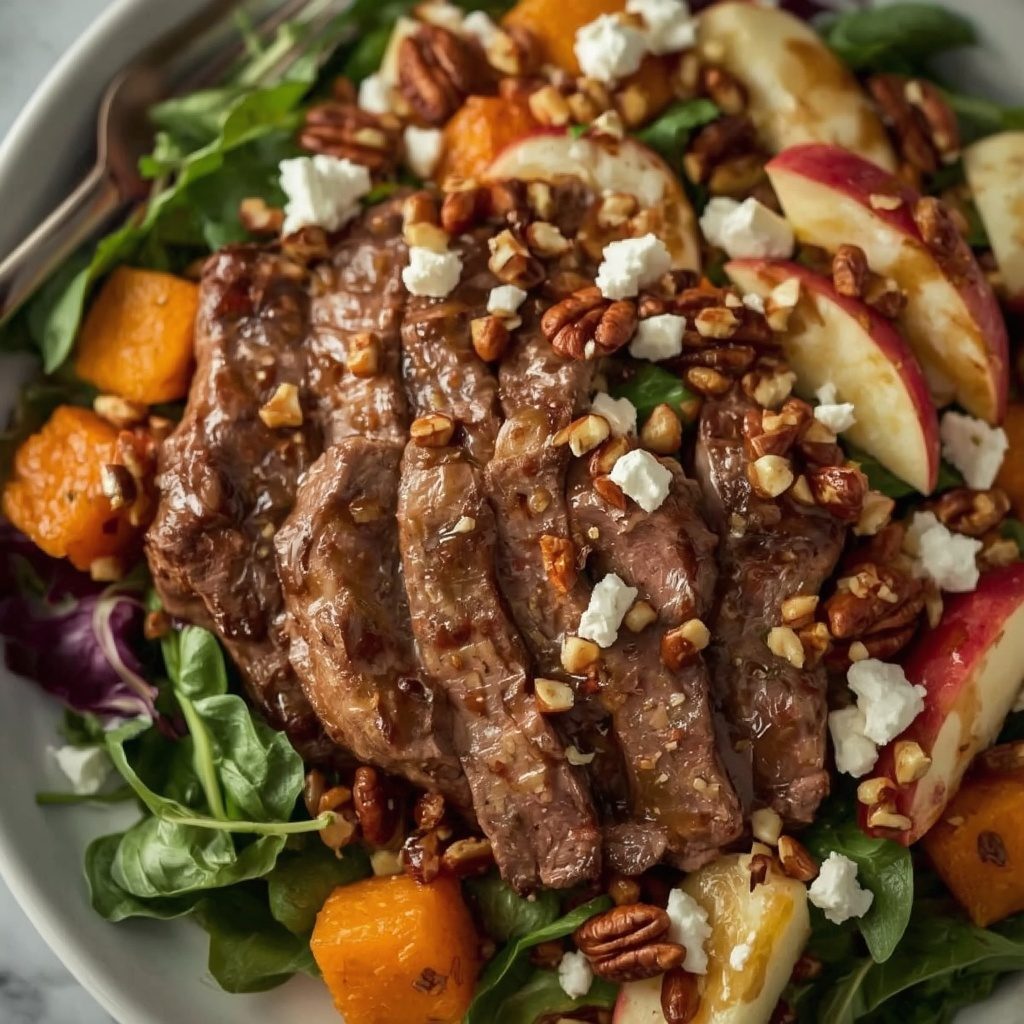
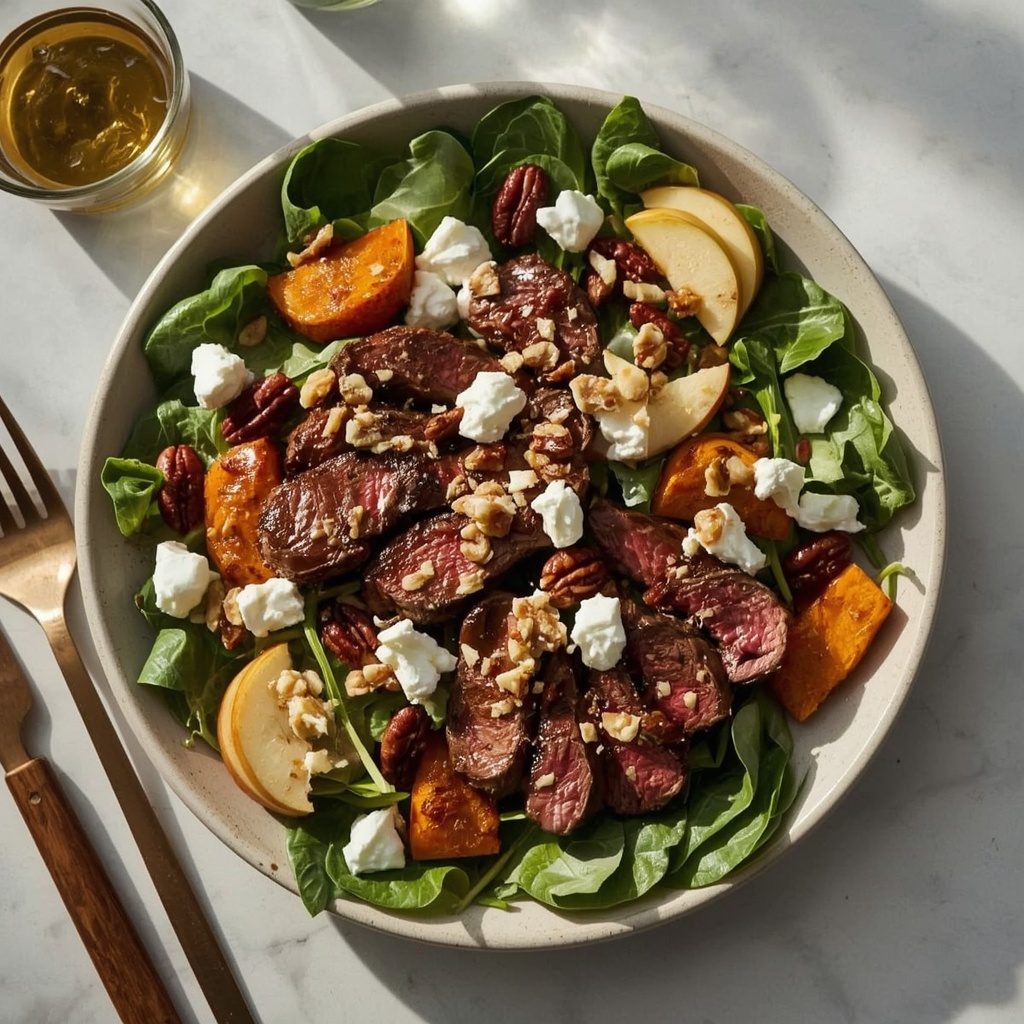
 Pioneer Woman Autumn Steak Salad is exactly the kind of dish that makes a weeknight feel a little more put-together. Seared flank steak, roasted butternut squash, crisp apples, tangy goat cheese, and toasted pecans all come together over a bed of mixed baby greens with a warm maple-Dijon vinaigrette. The contrast between warm roasted vegetables, cool crisp greens, and tender sliced steak makes every forkful interesting.
Total time runs about 45 minutes, and the difficulty level sits at a comfortable intermediate — the only real watch-point is getting a proper sear on the steak without overcooking it. This is the salad you make when you want a main course that feels special enough for a fall dinner party but easy enough for a Tuesday night. It is hearty without being heavy, and the colors alone will make you want to dig in.
What is Pioneer Woman Autumn Steak Salad?
This dish is a main-course salad built around seared flank steak, roasted butternut squash, sliced Honeycrisp apple, red onion, dried cranberries, and toasted pecans tossed with mixed baby greens. The dressing is a warm maple-Dijon vinaigrette made with apple cider vinegar, shallot, and extra-virgin olive oil. It comes together on the stovetop and in the oven, not the grill, which makes it a practical choice any time of year. The flavor leans savory-sweet with a hit of tang from the goat cheese and Dijon, while the textures bounce between tender meat, soft squash, crunchy apple, and crisp pecans.
Why You Should Try This Recipe
- One-Pan Protein — the flank steak sears in a single cast-iron skillet with a spice rub that builds a deep crust without any marinade time.
- Seasonal Ingredients at Their Peak — butternut squash, crisp apples, and pecans all hit their stride in the fall, so everything tastes exactly like it should.
- Balanced and Satisfying — nearly 38 grams of protein and 7 grams of fiber per serving means this salad actually keeps you full, which is rare for a green-based dish.
- Dressing You Will Reuse — the maple-Dijon vinaigrette doubles as a fantastic weeknight dressing for roasted vegetables, grain bowls, or simple green salads.
- Serve It Warm or Cold — the steak and squash can be served slightly warm over the greens or fully chilled the next day, so leftovers do not feel like a compromise.
Ingredients Needed to Make Pioneer Woman Autumn Steak Salad
You probably have most of the pantry items already. The fresh produce and the flank steak are the only things that might require a quick trip to the store, and everything else keeps well in the fridge or cupboard.
Steak and Seasoning
- 1 1/2 lb flank steak, trimmed of excess silver skin — the star of the dish. Flank steak has a loose grain and pronounced beefy flavor, and slicing against the grain keeps each bite tender. Flat iron steak or sirloin works as a budget swap.
- 1 tbsp olive oil, divided — half goes on the squash, half on the steak. Regular olive oil is fine here since you are roasting and searing, not making a delicate dressing.
- 1 1/2 tsp kosher salt, divided — split between the squash seasoning and the steak rub. Kosher salt dissolves evenly and seasons more predictably than fine table salt.
- 1 tsp freshly ground black pepper, divided — same split approach. Freshly ground gives you a more aromatic bite than pre-ground.
- 1 tsp smoked paprika — adds a subtle smoky depth to the steak crust without overpowering the other flavors.
- 1/2 tsp garlic powder — rounds out the rub with a mellow, savory note that does not burn the way fresh garlic would at high heat.
Roasted Squash and Produce
- 3 cups butternut squash, peeled, seeded, and cut into 1/2-inch cubes (about 1 small squash) — roasting concentrates its natural sweetness and gives you those caramelized edges. Pre-cubed squash from the store saves real time here.
- 1 large Honeycrisp apple, cored and thinly sliced (about 2 cups) — Honeycrisp holds its crunch better than softer varieties and brings a clean tartness. Gala or Fuji both work in a pinch.
- 1/2 cup red onion, very thinly sliced — a little sharpness cuts through the sweet elements. Soak the slices in cold water for 5 minutes if raw onion tends to overwhelm you.
- 8 oz mixed baby greens (spring mix or baby spinach and arugula blend) — spring mix gives a soft, tender base. A spinach-arugula blend leans a bit more peppery and sturdy.
Toppings and Vinaigrette
- 4 oz goat cheese, crumbled — creamy, tangy, and just sharp enough to balance the maple sweetness in the dressing. Feta makes a decent stand-in if goat cheese is not your thing.
- 1/2 cup pecan halves, toasted and roughly chopped — toasting pecans for 5-7 minutes in a dry skillet transforms them from dull to deeply nutty. Walnuts work as a swap.
- 1/2 cup dried cranberries — chewy little pops of sweetness throughout the salad. Look for unsweetened or lightly sweetened versions if you want more tartness.
- 1/4 cup extra-virgin olive oil — the base of the vinaigrette. Use a good one here because the flavor comes through directly.
- 2 tbsp apple cider vinegar — bright, fruity acidity that plays well with both the apple slices and the sweet squash.
- 1 tbsp pure maple syrup — adds a warm, caramel-like sweetness that ties the whole autumn flavor profile together. Real maple syrup only; pancake syrup will not deliver the same depth.
- 1 tbsp Dijon mustard — helps emulsify the dressing and adds a sharp, vinegary kick.
- 1 small shallot, finely minced (about 2 tbsp) — mellower than raw onion and gives the vinaigrette a subtle allium note without overpowering it.
- 1/4 tsp kosher salt — seasoning for the dressing.
- 1/4 tsp freshly ground black pepper — seasoning for the dressing.
Step by Step Instructions to Prepare Pioneer Woman Autumn Steak Salad
Here is the order that keeps everything moving efficiently — squash first, then steak, then dressing while the meat rests. Follow it and nothing sits around getting cold or soggy.
- Dry and Rest the Steak — pat the flank steak completely dry with paper towels and let it rest at room temperature for 20 minutes while you prepare the other components. Drying the surface is critical because it allows you to achieve a deep brown crust during searing rather than steaming the meat. While it rests, combine 1 teaspoon kosher salt, 1/2 teaspoon black pepper, the smoked paprika, and garlic powder in a small bowl, mixing until evenly distributed.
- Roast the Butternut Squash — preheat the oven to 425°F / 218°C with a rack positioned in the center. On a large rimmed baking sheet, toss the cubed butternut squash with 1/2 tablespoon of the olive oil, 1/4 teaspoon kosher salt, and 1/4 teaspoon black pepper, spreading the cubes into a single layer with space between them. Roast for 20 to 25 minutes, stirring once halfway through, until the edges are caramelized and the centers are tender when pierced with a fork. Remove from the oven and set aside to cool slightly while you cook the steak.
- Season the Steak — rub the flank steak all over with the remaining 1/2 tablespoon of olive oil, then coat it evenly with the spice mixture, pressing gently so the rub adheres to the meat. Let the seasoned steak sit for 5 minutes before cooking so the salt begins to draw moisture to the surface and the spices bloom.
- Heat the Skillet — heat a large cast-iron skillet over medium-high heat until a drop of water flicked onto the surface sizzles and evaporates immediately, about 3 to 4 minutes. The pan must be fully hot before the steak goes in or it will stick and fail to sear. Do not add oil to the pan; the oil on the steak is sufficient.
- Sear the First Side — lay the seasoned flank steak in the hot skillet away from you to prevent splatter and let it cook undisturbed for 5 to 6 minutes on the first side. You should hear an aggressive, steady sizzle and see deep brown edges forming around the perimeter. Avoid moving or lifting the steak during this time, as constant contact with the hot surface is what builds the flavorful crust.
- Flip and Finish Cooking — flip the steak with tongs and continue cooking for 4 to 5 minutes on the second side for medium-rare, or until an instant-read thermometer inserted into the thickest part registers 130°F / 54°C for medium-rare or 135°F / 57°C for medium. Keep in mind the temperature will rise approximately 5°F as the meat rests. Transfer the steak to a cutting board, tent loosely with foil, and rest for 10 minutes so the juices redistribute throughout the muscle fibers.
- Make the Vinaigrette — while the steak rests, combine the extra-virgin olive oil, apple cider vinegar, maple syrup, Dijon mustard, minced shallot, 1/4 teaspoon kosher salt, and 1/4 teaspoon black pepper in a medium bowl or a glass jar with a tight-fitting lid. Whisk vigorously or shake the sealed jar for 30 seconds until the dressing is completely emulsified and thick enough to coat the back of a spoon.
- Slice Against the Grain — after the steak has rested, place it on a clean cutting board and locate the grain, which appears as long parallel muscle fibers running the length of the meat. Using a sharp chef’s knife, slice the steak against the grain into thin strips, about 1/4 inch thick, cutting across those muscle fibers rather than parallel to them so the slices are short-fibered and tender rather than chewy.
- Toss the Greens — in a very large mixing bowl, combine the mixed baby greens, sliced apple, sliced red onion, dried cranberries, and toasted pecans. Toss gently with two-thirds of the vinaigrette, using clean hands or a pair of tongs to lift the greens from the bottom and ensure every leaf is lightly coated without crushing any ingredients.
- Assemble and Serve — divide the dressed greens evenly among four wide, shallow serving bowls or arrange on a large serving platter. Top each portion with an equal amount of the roasted butternut squash, the sliced steak arranged in a neat row across the center, and finally crumble the goat cheese over the top. Drizzle the remaining vinaigrette over the steak and finished salads just before serving, allowing the warm roasted squash and steak to gently wilt the greens beneath them.
What Goes Well With Pioneer Woman Autumn Steak Salad
This salad is a complete meal on its own, but a few simple sides can round out the table beautifully if you are feeding a crowd or want to stretch the menu.
- Crusty Sourdough Bread — warm, chewy bread with a shatteringly crisp crust soaks up the extra vinaigrette better than anything else on the table.
- Roasted Garlic Mashed Potatoes — soft, buttery potatoes make an indulgent contrast to the fresh, crunchy greens and bright dressing.
- Sparkling Apple Cider — cold and lightly fizzy, it echoes the apple and maple notes in the dressing without competing with the steak.
- Roasted Brussels Sprouts — another roasted autumn vegetable with lightly charred edges brings a bitter, caramelized note that plays well against the sweet squash.
- Butternut Squash Soup — a silky bowl as a starter turns this into a two-course autumn dinner without much extra effort.
- Herbed Quinoa — a warm, fluffy grain side adds even more substance for bigger appetites while keeping the meal on the lighter side.
Essential Tips for Perfecting Pioneer Woman Autumn Steak Salad
Once you make it a few times, you will develop your own rhythm. These are the details that make the biggest difference between a good salad and a great one.
- Dry the Steak Thoroughly — patting the surface completely dry with paper towels is non-negotiable for a proper sear. Moisture on the surface creates steam, and steam prevents browning, which means a grey, chewy steak instead of a deeply browned, flavorful crust.
- Give the Squash Space — crowding the baking sheet traps steam and turns the cubes soft and pale instead of caramelized. Use a large rimmed sheet and keep the pieces in a single layer with small gaps between them.
- Slice Against the Grain Every Time — flank steak has long, obvious muscle fibers. Cutting perpendicular to those fibers shortens them, which translates directly into tenderness. Slicing with the grain gives you long, chewy strands no matter how perfectly you cooked the meat.
- Dress the Greens Lightly, Then Add More at the End — tossing with only two-thirds of the vinaigrette keeps the leaves gently coated, while the final drizzle over the steak and warm components concentrates flavor where it matters most.
- Rest the Meat for the Full 10 Minutes — cutting into the steak too early lets all the juices spill out onto the board, leaving the slices dry. Tent it loosely with foil and set a timer if you must, but do not skip the rest.
- Use Wide, Shallow Bowls — a wide surface area lets the warm squash and steak nestle into the greens rather than burying them, so every bite has a mix of textures instead of a pile of toppings on top of naked leaves.
- Toast the Pecans Yourself — pre-toasted nuts from a bag are often stale by the time you open them. A dry skillet over medium heat for about 5 minutes wakes them up and deepens their flavor significantly.
Variations of Pioneer Woman Autumn Steak Salad
This recipe is forgiving enough to flex with what you have on hand. A few swaps can take it in entirely different directions.
- Blue Cheese Swap — use crumbled blue cheese instead of goat cheese for a sharper, funkier edge that stands up to the steak even more aggressively.
- Pear and Walnut Twist — swap the apple for sliced Bosc pear and the pecans for toasted walnuts to lean into a softer, more honeyed sweetness.
- Warm Grain Version — add 2 cups of cooked farro or quinoa to the greens, which absorbs the dressing and turns this into an even heartier grain bowl-style salad.
- Spicy Kick — add a pinch of cayenne or a few thin slices of fresh fresno chile to the steak rub for those who want some heat behind the sweetness.
- Chicken Alternative — replace the flank steak with two seared chicken breasts using the same spice rub. Cook for 6-7 minutes per side over medium-high heat until the internal temperature reaches 165°F / 74°C.
- Dairy-Free Option — skip the goat cheese entirely and add a handful of avocado cubes for creaminess without any dairy.
Storing Pioneer Woman Autumn Steak Salad: Best Practices
Salads with warm and cold components do not store well as one mixed dish, so keeping things separate is the smartest move. Here is how to handle each part.
- Dressed Greens — store in an airtight container in the refrigerator for up to 1 day. The leaves will soften over time, so this is best enjoyed the next day rather than several days later.
- Cooked Steak — keep the sliced or unsliced steak in a separate airtight container in the refrigerator for up to 3 days. Slicing it after reheating rather than before will help preserve moisture.
- Roasted Squash — refrigerate in a covered container for up to 4 days. Reheat gently or enjoy cold, depending on how you plan to rebuild the salad.
- Maple-Dijon Vinaigrette — sealed in a glass jar, the dressing keeps in the refrigerator for up to 1 week. Bring it to room temperature and shake well before using, since the oil and vinegar will separate as it chills.
Reheating Pioneer Woman Autumn Steak Salad: Best Practices
The steak is the only component that truly benefits from reheating. Everything else is better served cold or at room temperature, so focus your effort there.
- Low-Heat Skillet — place the steak in a dry or lightly oiled skillet over low heat and warm for 2-3 minutes per side until just warmed through. Watch closely to avoid further cooking the meat past your preferred doneness.
- Microwave on Low Power — use a microwave-safe plate and heat in 20-second intervals at 50% power. This method is fast but risks toughness if overheated, so err on the side of shorter bursts.
- Cold, Straight from the Fridge — honestly, this steak tastes great cold. Thin slices drizzled with a little extra vinaigrette over fresh greens make a fantastic next-day lunch with zero cooking effort.
- Avoid Reheating the Squash and Greens — the squash turns soggy when reheated and the greens wilt into mush. Keep those cold and let the warm steak provide the temperature contrast instead.
FAQs
Can I freeze Pioneer Woman Autumn Steak Salad?
No, this dish does not freeze well. The greens and roasted vegetables release water when thawed, turning everything watery and mushy. The steak itself can be frozen separately before cooking, but once the salad is assembled, enjoy it fresh.
How long does Pioneer Woman Autumn Steak Salad last in the fridge?
Components stored separately will last up to 4 days for the roasted squash, 3 days for the steak, and about 1 week for the vinaigrette. Dressed greens are best eaten within 1 day, as they soften quickly after being tossed with dressing.
What cut of steak works best for this salad?
Flank steak is ideal because it sears quickly, slices beautifully against the grain, and has a bold flavor that holds up to the sweet-tangy dressing. Sirloin or flat iron steak are both solid substitutes if flank is unavailable or you want a more budget-friendly option.
Is Pioneer Woman Autumn Steak Salad healthy?
Each serving delivers 642 calories, 38 grams of protein, 7 grams of fiber, and 39 grams of fat. The fat comes mostly from olive oil, pecans, and goat cheese, all of which are nutrient-dense sources. It is a well-rounded main course with plenty of protein and fiber to keep you satisfied.
Can I make this salad ahead of time?
Yes, with a smart strategy. Roast the squash, cook and slice the steak, and make the vinaigrette up to a day in advance, storing each component separately. Assemble and dress the greens just before serving so nothing wilts or gets soggy.
What can I use instead of butternut squash?
Sweet potatoes or delicata squash both roast beautifully and bring a similar caramelized sweetness to the salad. Cut them into the same 1/2-inch cubes and follow the same roasting time and temperature.
Print
Pioneer Woman Autumn Steak Salad
- Prep Time: 20
- Cook Time: 25
- Total Time: 45
- Yield: 4 1x
- Category: Main Course
- Method: Stovetop
- Cuisine: American
Description
A hearty, colorful salad featuring seared flank steak, roasted butternut squash, crisp apples, tangy goat cheese, and crunchy pecans tossed with mixed greens and a warm maple-Dijon vinaigrette. The contrast of warm roasted vegetables and cool crisp greens makes this a satisfying autumn main course.
Ingredients
- 1 1/2 lb flank steak, trimmed of excess silver skin
- 1 tbsp olive oil, divided
- 1 1/2 tsp kosher salt, divided
- 1 tsp freshly ground black pepper, divided
- 1 tsp smoked paprika
- 1/2 tsp garlic powder
- 3 cups butternut squash, peeled, seeded, and cut into 1/2-inch cubes (about 1 small squash)
- 1 large Honeycrisp apple, cored and thinly sliced (about 2 cups)
- 1/2 cup red onion, very thinly sliced
- 8 oz mixed baby greens (spring mix or baby spinach and arugula blend)
- 4 oz goat cheese, crumbled
- 1/2 cup pecan halves, toasted and roughly chopped
- 1/2 cup dried cranberries
- 1/4 cup extra-virgin olive oil
- 2 tbsp apple cider vinegar
- 1 tbsp pure maple syrup
- 1 tbsp Dijon mustard
- 1 small shallot, finely minced (about 2 tbsp)
- 1/4 tsp kosher salt
- 1/4 tsp freshly ground black pepper
Instructions
- Pat the flank steak completely dry with paper towels and let it rest at room temperature for 20 minutes while you prepare the other components. Drying the surface is critical because it allows you to achieve a deep brown crust during searing rather than steaming the meat. While it rests, in a small bowl combine 1 teaspoon kosher salt, 1/2 teaspoon black pepper, the smoked paprika, and garlic powder, mixing until evenly distributed.
- Preheat the oven to 425°F / 218°C with a rack positioned in the center. On a large rimmed baking sheet, toss the cubed butternut squash with 1/2 tablespoon of the olive oil, 1/4 teaspoon kosher salt, and 1/4 teaspoon black pepper, spreading the cubes into a single layer with space between them. Roast for 20 to 25 minutes, stirring once halfway through, until the edges are caramelized and the centers are tender when pierced with a fork. Remove from the oven and set aside to cool slightly while you cook the steak.
- Rub the flank steak all over with the remaining 1/2 tablespoon of olive oil, then coat it evenly with the spice mixture, pressing gently so the rub adheres to the meat. Let the seasoned steak sit for 5 minutes before cooking so the salt begins to draw moisture to the surface and the spices bloom.
- Heat a large cast-iron skillet over medium-high heat until a drop of water flicked onto the surface sizzles and evaporates immediately, about 3 to 4 minutes. The pan must be fully hot before the steak goes in or it will stick and fail to sear. Do not add oil to the pan; the oil on the steak is sufficient.
- Lay the seasoned flank steak in the hot skillet away from you to prevent splatter and let it cook undisturbed for 5 to 6 minutes on the first side. You should hear an aggressive, steady sizzle and see deep brown edges forming around the perimeter. Avoid moving or lifting the steak during this time, as constant contact with the hot surface is what builds the flavorful crust.
- Flip the steak with tongs and continue cooking for 4 to 5 minutes on the second side for medium-rare, or until an instant-read thermometer inserted into the thickest part registers 130°F / 54°C for medium-rare or 135°F / 57°C for medium. Keep in mind the temperature will rise approximately 5°F as the meat rests. Transfer the steak to a cutting board, tent loosely with foil, and rest for 10 minutes so the juices redistribute throughout the muscle fibers.
- While the steak rests, make the vinaigrette. In a medium bowl or a glass jar with a tight-fitting lid, combine the extra-virgin olive oil, apple cider vinegar, maple syrup, Dijon mustard, minced shallot, 1/4 teaspoon kosher salt, and 1/4 teaspoon black pepper. Whisk vigorously or shake the sealed jar for 30 seconds until the dressing is completely emulsified and thick enough to coat the back of a spoon.
- After the steak has rested, place it on a clean cutting board and locate the grain, which appears as long parallel muscle fibers running the length of the meat. Using a sharp chef’s knife, slice the steak against the grain into thin strips, about 1/4 inch thick, cutting across those muscle fibers rather than parallel to them so the slices are short-fibered and tender rather than chewy.
- In a very large mixing bowl, combine the mixed baby greens, sliced apple, sliced red onion, dried cranberries, and toasted pecans. Toss gently with two-thirds of the vinaigrette, using clean hands or a pair of tongs to lift the greens from the bottom and ensure every leaf is lightly coated without crushing any ingredients.
- Divide the dressed greens evenly among four wide, shallow serving bowls or arrange on a large serving platter. Top each portion with an equal amount of the roasted butternut squash, the sliced steak arranged in a neat row across the center, and finally crumble the goat cheese over the top. Drizzle the remaining vinaigrette over the steak and finished salads just before serving, allowing the warm roasted squash and steak to gently wilt the greens beneath them.
Notes
Store any leftover salad components separately for best quality: keep the dressed greens in an airtight container in the refrigerator for up to 1 day, the cooked steak in a separate container for up to 3 days, and the roasted squash for up to 4 days. Do not freeze this salad as the greens and roasted vegetables will become watery and mushy upon thawing. To serve leftovers, gently reheat the steak in a skillet over low heat until just warmed through, about 2-3 minutes per side, or enjoy cold. The vinaigrette will keep in a sealed jar in the refrigerator for up to 1 week; bring to room temperature and shake well before using. For a more budget-friendly option, sliced sirloin or flat iron steak can replace the flank steak.
Nutrition
- Calories: 642
- Sugar: 23g
- Sodium: 780mg
- Unsaturated Fat: 11g
- Carbohydrates: 38g
- Fiber: 7g
- Protein: 38g
- Cholesterol: 102mg
Keywords: autumn steak salad, pioneer woman steak salad, fall salad recipe, steak salad with butternut squash, maple dijon steak salad, hearty salad, fall dinner, goat cheese salad, roasted butternut squash salad, flank steak main course, seasonal salad, weeknight dinner