 Anabelle McLean
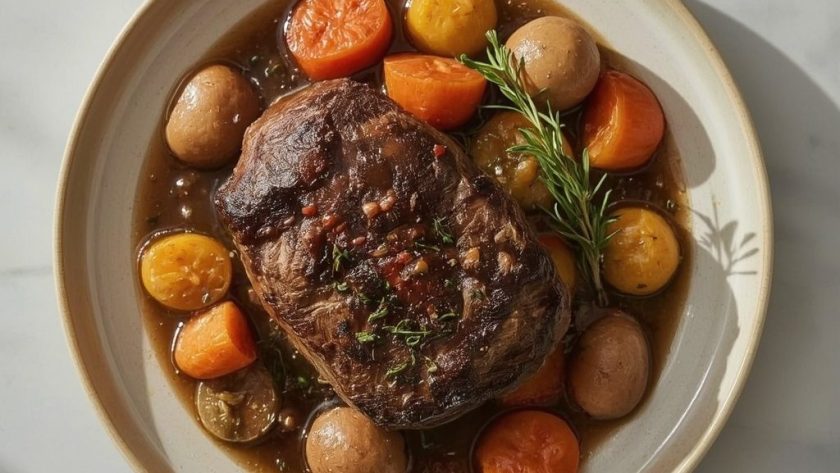
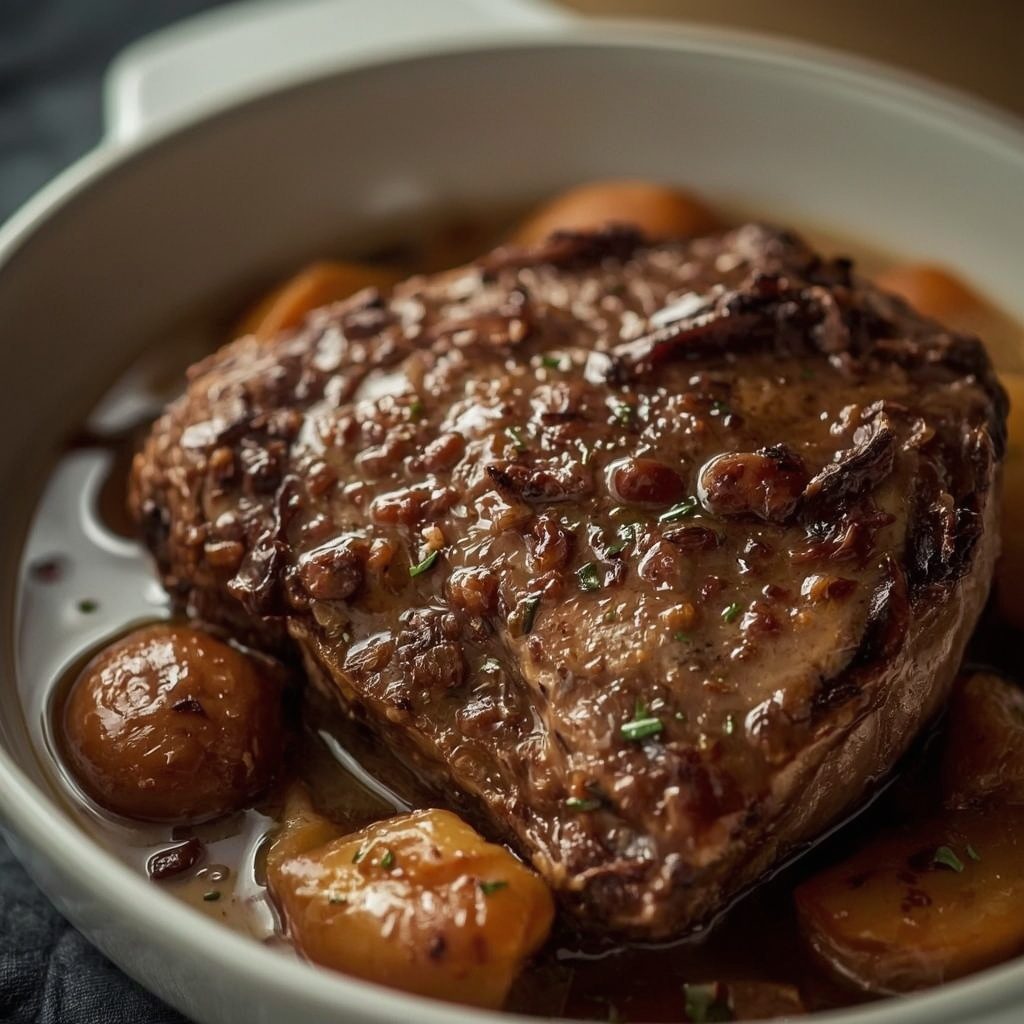
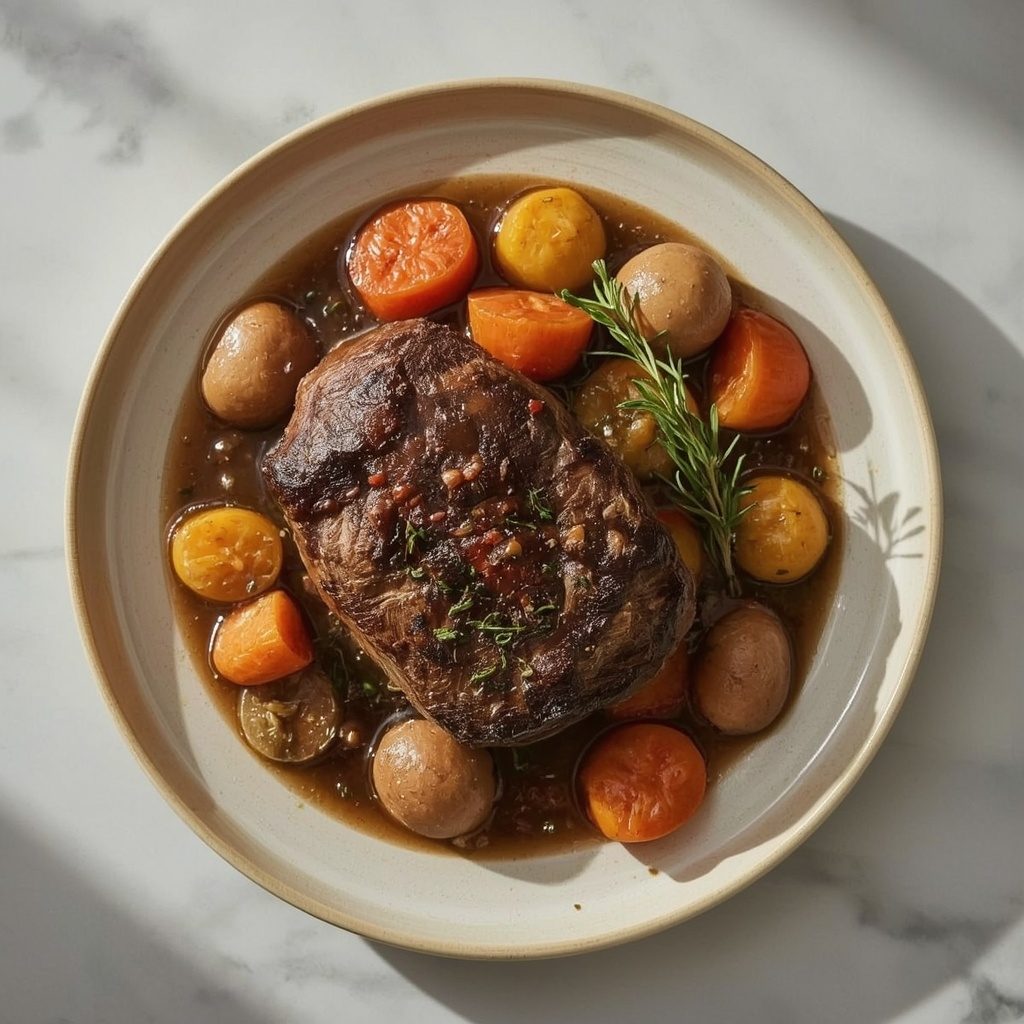
 Julia Childs Pot Roast is the kind of dish that turns an ordinary chuck roast into something deeply savory and fork-tender. It braises low and slow in beef stock with aromatic vegetables, fresh thyme, and rosemary until the meat nearly collapses under a fork. This is rustic French comfort food with a burnished crust and a silky, full-bodied gravy.
Plan on about 3 hours of total time, most of it hands-off while the pot does the work. The method is intermediate — not because any single step is hard, but because patience matters. Searing the meat properly before braising is the one step you should not rush. Make it on a lazy Sunday when the house can fill with that slow-cooked aroma.
What is Julia Childs Pot Roast?
This dish is a beef chuck roast braised in beef stock with onion, carrot, celery, and garlic. The meat sears first until deeply browned, then slow-cooks with tomato paste, flour, and fresh herbs until tender. What you get is beef that slices clean but shreds at the slightest pressure, coated in a glossy sauce with softened vegetables.
The flavor runs deep and savory with a subtle caramel sweetness from the tomato paste and browned vegetables. It is hearty but not heavy — the braising liquid reduces into something concentrated and silky. Serve it on a cold evening or whenever you want a meal that feels like it took far more effort than it actually did.
Why You Should Try This Recipe
- Fork-Tender Beef — Low, slow braising breaks down the chuck roast until a fork slides through with almost no resistance.
- Deep Savory Gravy — The flour, tomato paste, and pan drippings meld into a glossy, full-flavored sauce you will want on everything.
- One Pot Does It All — Browning and braising happen in the same Dutch oven, which keeps cleanup simple and flavor concentrated.
- Feeds a Small Crowd — Four generous servings from one roast, and leftovers reheat beautifully for days.
- Classic Technique, No Fuss — This teaches the fundamentals of braising without complicated steps or hard-to-find ingredients.
Ingredients Needed to Make Julia Childs Pot Roast
You likely have most of these staples already. The one thing worth spending on is the beef itself — a well-marbled chuck roast makes all the difference.
The Meat
- 2 1/2 lb beef chuck roast — Tied into a uniform shape with kitchen twine, then patted completely dry before searing. Ask your butcher to tie it if you are unsure how.
Seasonings
- 2 tsp kosher salt, divided — Used in stages: on the meat before searing, then in the vegetables.
- 1 tsp freshly ground black pepper, divided — Freshly ground gives more warmth than pre-ground.
For the Sear and Braise
- 2 tbsp vegetable oil, divided — Neutral oil with a high smoke point for deep browning.
- 1 large yellow onion — Halved through the root and thinly sliced, about 2 cups.
- 2 medium carrots — Peeled and cut into 2-inch chunks, about 1 1/2 cups.
- 2 celery stalks — Cut into 2-inch pieces, about 1 cup.
- 3 garlic cloves — Smashed and peeled; smashed cloves release flavor without burning.
- 1 tbsp tomato paste — Cooked until brick-rust colored for concentrated sweetness.
- 3 tbsp all-purpose flour — Thickens the braising liquid into a silky gravy.
- 4 cups beef stock — Homemade or low-sodium store-bought, warmed before adding. Warm stock keeps the braise from stalling.
- 2 bay leaves — Removed before serving; adds subtle earthy depth.
- 4 sprigs fresh thyme — Stems tuck right into the liquid and infuse the whole braise.
- 2 sprigs fresh rosemary — A little goes far; two sprigs give aromatic pine notes without overpowering.
Finishing Touches
- 2 tbsp unsalted butter, cold — Whisked in at the end to make the sauce glossy and lightly rich.
- 1 tbsp fresh flat-leaf parsley — Chopped for garnish; adds freshness against the deep brown sauce.
Step by Step Instructions to Prepare Julia Childs Pot Roast
Here is the full method, step by step, including the small details that make a real difference.
- Bring the Meat to Room Temperature — Remove the tied roast from the refrigerator 45 minutes before cooking. Pat it completely dry with paper towels, then season all sides with 1 1/2 teaspoons kosher salt and 1/2 teaspoon black pepper, pressing the seasoning into the meat.
- Heat the Oil — Place a 5- to 6-quart Dutch oven over medium-high heat and add 1 tablespoon vegetable oil. Let it heat until shimmering and just beginning to smoke lightly, about 2 to 3 minutes.
- Sear the Roast — Lay the roast in the pot away from you to avoid splatter. Do not move it for 4 to 5 minutes until the bottom releases easily and shows a deep mahogany crust. Turn with tongs and repeat on all sides, about 4 minutes per side, 12 to 15 minutes total. Transfer to a rimmed plate.
- Cook the Aromatics — Reduce heat to medium and add the remaining 1 tablespoon oil. Add onion, carrot, celery, and garlic. Stir often with a wooden spoon, scraping up browned bits, until the onion is translucent and the vegetables are golden at the edges, about 8 to 10 minutes. Add remaining 1/2 teaspoon salt and 1/2 teaspoon pepper during this step.
- Caramelize the Tomato Paste — Add the tomato paste and stir constantly until it darkens from bright red to brick-rust and smells sweet, about 2 minutes. Lower the heat slightly if it begins to stick.
- Add the Flour — Sprinkle flour evenly over the vegetables and cook, stirring without stopping, for 2 minutes to remove the raw flour taste. The mixture will look pasty and clump around the vegetables — that is correct.
- Deglaze with Stock — Pour in 1 cup of warm beef stock and stir vigorously, scraping the bottom to dissolve the flour into a smooth slurry. Once thick and glossy with no lumps, add the remaining 3 cups stock and stir until fully combined.
- Return the Roast — Put the seared roast back in the pot along with any juices from the plate. Tuck bay leaves, thyme, and rosemary into the liquid around the meat. Liquid should come about two-thirds of the way up the sides — add a splash more stock if needed.
- Bring to a Gentle Simmer — Bring the liquid to a gentle simmer over medium heat, then reduce heat to low so only a few lazy bubbles break the surface. Cover with a tight lid and braise for 2 1/2 to 3 hours, turning the roast once halfway through. The roast is done when a fork slides into the center with almost no resistance.
- Check the Liquid Level — Check after the first hour and again after the second. If more than half the liquid has evaporated, add 1/2 cup warm stock or water. During the final 30 minutes, remove the lid to let the braising liquid reduce slightly.
- Rest the Meat — Transfer the fork-tender roast to a cutting board and tent loosely with foil. Rest for 15 minutes so juices redistribute throughout the meat before carving.
- Skim and Reduce the Sauce — While the meat rests, tilt the pot and skim about 3 to 4 tablespoons of clear fat from the surface. Place the pot over medium-high heat and simmer uncovered until the liquid reduces by about one-quarter and coats the back of a spoon, 10 to 15 minutes.
- Finish with Butter — Remove bay leaves and herb stems. Take the pot off the heat and whisk in the cold butter cubes one or two at a time until the sauce is glossy and lightly thickened. Taste and adjust with additional salt and pepper.
- Carve and Serve — Cut the twine from the roast and carve against the grain into slices about 1/2 inch thick. Arrange on a warm platter, spoon the vegetables and sauce generously over the top, and shower with chopped parsley.
What Goes Well With Julia Childs Pot Roast
The braising liquid turns into a rich, spoonable gravy, so choose sides that soak it up well.
- Buttered Egg Noodles — Wide noodles catch every bit of the glossy sauce and add a soft, chewy contrast to the tender beef.
- Mashed Potatoes — Creamy potatoes are the classic choice, giving the reduced braising liquid a perfect landing spot.
- Crusty Bread — A warm baguette or rustic sourdough for sopping up the last drops from the plate.
- Steamed Green Beans — Lightly cooked beans keep their snap and add a fresh, green note against the deep savory flavors.
- Roasted Root Vegetables — Extra carrots and parsnips roasted in the oven echo the braised aromatics without repeating their soft texture.
- A Simple Green Salad — Something crisp with a sharp vinaigrette cuts through the richness of the beef and butter-finished sauce.
Essential Tips for Perfecting Julia Childs Pot Roast
These details separate a good braise from a genuinely memorable one.
- Pat the Meat Truly Dry — Surface moisture is the enemy of a good sear. Wet meat steams instead of browns, and that browned crust is where the deep flavor starts. Take an extra minute with paper towels before the salt goes on.
- Do Not Move the Roast Too Early — That first 4 to 5 minutes on the sear feels long, but the meat will release on its own when the crust forms. If it sticks, it is not ready yet. Forcing it tears the surface.
- Use a Heavy Pot with a Tight Lid — A 5- to 6-quart Dutch oven holds heat evenly and keeps moisture in. A loose lid lets too much steam escape, and you will end up adding liquid the whole time.
- Warm the Stock Before Adding It — Cold stock drops the temperature and stalls the braise. Warming it keeps the liquid at a steady simmer and prevents the meat from seizing.
- Turn the Roast Once Halfway — The side sitting above the liquid cooks slightly differently than the submerged side. One gentle turn at the halfway mark keeps the whole roast evenly tender.
- Rest Before Carving — Cutting into the roast right out of the pot lets the juices run all over the board instead of staying in the meat. Fifteen minutes under foil is non-negotiable.
- Finish the Sauce Off the Heat — Whisking cold butter into a boiling sauce can make it split. Pull the pot off the heat and add the cubes one at a time for a stable, glossy finish.
Variations of Julia Childs Pot Roast
Once you have the base method down, there is room to play with the flavors.
- Mushroom-Rich Version — Add 8 ounces of sliced cremini mushrooms to the vegetables during the last 5 minutes of their sauté. They release earthy liquid that deepens the braising jus.
- Root Vegetable Swap — Replace the celery with parsnips or turnips cut into 2-inch chunks. They braise to a soft, sweet finish and add a different texture to the pot.
- Herb Variation — Swap the rosemary for 2 sprigs of fresh sage or add a small strip of orange zest to the braising liquid for a brighter, slightly floral note.
- Smoky Paprika Twist — Stir 1 teaspoon of smoked paprika in with the tomato paste. It adds a subtle smokiness that echoes the seared crust.
- Garlic-Heavy Version — Double the garlic to six cloves and leave them whole instead of smashed. They turn soft and mellow after hours in the braise, almost spreadable.
- Dairy-Free Finish — Skip the butter entirely and let the sauce reduce a few minutes longer. It will still be glossy and thick from the flour, just a bit leaner.
Storing Julia Childs Pot Roast: Best Practices
Leftovers hold up well, and the sauce keeps everything moist. Here is how to store them properly.
- Refrigerator Storage — Cool completely, then transfer meat, vegetables, and sauce to an airtight container. It keeps for up to 4 days, and the flavor improves after a day as everything melds.
- Freezer Storage — Use a freezer-safe container with the meat fully submerged in sauce to prevent freezer burn. Freeze for up to 3 months.
- Thawing the Frozen Dish — Thaw overnight in the refrigerator rather than at room temperature. Slow thawing protects the texture of the beef.
- Portioned Leftovers — Divide into single-serving containers before freezing so you only reheat what you need. Smaller portions thaw faster and more evenly.
- Sauce on the Side — If you plan to freeze, consider storing some sauce separately. It gives you more control when reheating and prevents the vegetables from getting too soft.
Reheating Julia Childs Pot Roast: Best Practices
Gentle heat is the rule here. Boiling will toughen the meat and dull the sauce.
- Stovetop Method — Place meat and sauce in a covered pot over low heat for 15 to 20 minutes, turning occasionally. The low, steady heat warms everything through without overcooking the beef.
- Oven Method — Put the meat and sauce in a covered baking dish at 300°F / 150°C for 25 to 30 minutes. Covering keeps moisture in, and the lower temperature prevents the sauce from reducing too much.
- Microwave Method — Heat individual portions in a microwave-safe dish at 50% power in 60-second intervals. Stir or turn the meat between intervals to avoid hot spots.
- Watch the Sauce — If the sauce looks too thick after reheating, add a splash of warm beef stock or water and stir gently. Bring it back to a low simmer briefly to recombine.
FAQs
Can I freeze Julia Childs Pot Roast?
Yes. Cool it completely first, then store the meat fully submerged in sauce in a freezer-safe container. It keeps well for up to 3 months, and thawing overnight in the fridge gives the best texture.
How long does Julia Childs Pot Roast last in the fridge?
Up to 4 days in an airtight container with the meat, vegetables, and sauce stored together. The flavor tends to get better after a day of sitting.
What is the best cut of beef for Julia Childs Pot Roast?
Beef chuck roast is the right choice. It has enough marbling and connective tissue to become tender during the long braise, and it holds its shape better than leaner cuts.
Why is my pot roast tough?
Almost always, it simply needs more time. Fork-tenderness happens when the collagen fully breaks down, and rushing the braise means tough, chewy slices. Another cause is boiling instead of simmering — keep the heat on low so only a few bubbles break the surface.
Can I make Julia Childs Pot Roast ahead of time?
Absolutely. Make it a day before and store it in the fridge. Reheat gently on the stovetop or in a low oven, and the sauce will have even more time to deepen in flavor.
Do I have to tie the roast?
Tying helps the roast hold a uniform shape so it cooks evenly and slices cleanly. If yours comes untied or you skip it, the roast may spread slightly in the pot, but it will still braise well — just expect slightly less uniform pieces.
Final Words
Julia Childs Pot Roast rewards patience in every way. The long braise does the heavy lifting while you go about your day, and what comes out of the pot is rich, tender, and deeply satisfying. Follow the searing step carefully, keep the heat low, and the rest falls into place on its own. This is the kind of meal worth making on repeat all through the colder months.
Print
Julia Child’s Pot Roast
- Prep Time: 30
- Cook Time: 180
- Total Time: 210
- Yield: 4 1x
- Category: Main Course
- Method: Braising
- Cuisine: French
Description
A deeply savory, fork-tender chuck roast braised low and slow in beef stock with aromatic vegetables and fresh herbs. The meat develops a burnished brown crust from careful searing, then collapses into rich, wine-dark pan juices thickened into a silky gravy. Served with the softened braising vegetables, it is rustic French comfort food at its most soulful.
Ingredients
- 2 1/2 lb beef chuck roast, tied into a uniform shape with kitchen twine, patted very dry
- 2 tsp kosher salt, divided
- 1 tsp freshly ground black pepper, divided
- 2 tbsp vegetable oil, divided
- 1 large yellow onion, halved through root and thinly sliced (about 2 cups)
- 2 medium carrots, peeled and cut into 2-inch chunks (about 1 1/2 cups)
- 2 celery stalks, cut into 2-inch pieces (about 1 cup)
- 3 garlic cloves, smashed and peeled
- 1 tbsp tomato paste
- 3 tbsp all-purpose flour
- 4 cups beef stock, homemade or low-sodium store-bought, warmed
- 2 bay leaves
- 4 sprigs fresh thyme
- 2 sprigs fresh rosemary
- 2 tbsp unsalted butter, cold, cut into small cubes
- 1 tbsp fresh flat-leaf parsley, finely chopped, for garnish
Instructions
- Remove the tied chuck roast from the refrigerator 45 minutes before cooking so it loses its deep chill. Pat the roast completely dry with paper towels, then season all sides evenly with 1 1/2 teaspoons of the kosher salt and 1/2 teaspoon of the black pepper, pressing the seasoning into the meat.
- Place a 5- to 6-quart Dutch oven or heavy-bottomed pot over medium-high heat and add 1 tablespoon of the vegetable oil. Allow the oil to heat until it shimmers and just begins to smoke lightly, about 2 to 3 minutes, then carefully lay the roast in the pot away from you to avoid splatter.
- Sear the roast without moving it for 4 to 5 minutes, until the bottom develops a deep mahogany crust that releases easily from the pot. Turn with tongs and repeat on all sides, about 4 minutes per side, for a total of 12 to 15 minutes, until the entire surface is deeply browned. Transfer the roast to a rimmed plate.
- Reduce the heat to medium and add the remaining 1 tablespoon of vegetable oil to the same pot. Add the onion, carrot, celery, and garlic, and cook, stirring often with a wooden spoon to scrape up the browned bits, until the onion is translucent and the vegetables are lightly golden at the edges, about 8 to 10 minutes. Add the remaining 1/2 teaspoon salt and 1/2 teaspoon pepper during this step.
- Add the tomato paste to the vegetable mixture and cook, stirring constantly, until it darkens from bright red to a brick-rust color and smells sweet and caramelized, about 2 minutes. Do not let it scorch; lower the heat slightly if it begins to stick.
- Sprinkle the flour evenly over the vegetables and cook, stirring without stopping, for 2 minutes to remove the raw flour taste. The mixture will look pasty and clump slightly around the vegetables, which is correct at this stage.
- Pour in 1 cup of the warmed beef stock and stir vigorously, scraping the bottom of the pot to dissolve the flour mixture into a smooth slurry. Once it is thick and glossy with no lumps, pour in the remaining 3 cups of stock and continue stirring until fully combined.
- Return the seared roast to the pot along with any juices that collected on the plate. Tuck the bay leaves, thyme sprigs, and rosemary sprigs into the liquid around the meat. The liquid should come about two-thirds of the way up the sides of the roast; add a splash more stock if needed.
- Bring the liquid to a gentle simmer over medium heat, then immediately reduce the heat to low so only a few lazy bubbles break the surface every second or two. Cover the pot with a tight-fitting lid and braise for 2 1/2 to 3 hours, turning the roast once halfway through, until a fork slides into the center of the meat with almost no resistance.
- Check the liquid level after the first hour and again after the second hour. If more than half the liquid has evaporated, add 1/2 cup warm stock or water. During the final 30 minutes, remove the lid to let the braising liquid reduce slightly and concentrate in flavor.
- When the roast is fork-tender, transfer it carefully to a cutting board and tent loosely with foil. Let the meat rest for 15 minutes so the juices redistribute throughout the roast before carving.
- While the meat rests, tilt the pot and use a wide, shallow spoon to skim the fat from the surface of the braising liquid. You should remove about 3 to 4 tablespoons of clear fat. Place the pot over medium-high heat and simmer the liquid, uncovered, until it reduces by about one-quarter and coats the back of a spoon, 10 to 15 minutes.
- Remove the bay leaves and herb stems from the reduced liquid. Remove the pot from the heat and whisk in the cold butter cubes, one or two at a time, until the sauce is glossy and lightly thickened. Taste and adjust with additional salt and pepper as needed.
- Cut the twine from the roast and carve the meat against the grain into thick slices, about 1/2 inch thick. Arrange on a warm platter, spoon the vegetables and sauce generously over the top, and shower with the chopped parsley before serving.
Notes
Storage: Cool completely, then transfer meat, vegetables, and sauce to an airtight container. Refrigerate for up to 4 days; the flavor improves after a day. Freeze in a freezer-safe container with the meat fully submerged in sauce for up to 3 months. Thaw overnight in the refrigerator. Reheating: Stovetop method — place meat and sauce in a covered pot over low heat for 15 to 20 minutes, turning occasionally, until heated through. Oven method — place in a covered baking dish at 300°F / 150°C for 25 to 30 minutes. Do not boil, which will toughen the meat. Serve with buttered egg noodles, mashed potatoes, or crusty bread.
Nutrition
- Calories: 648
- Sugar: 5g
- Sodium: 980mg
- Unsaturated Fat: 15g
- Carbohydrates: 15g
- Fiber: 3g
- Protein: 57g
- Cholesterol: 185mg
Keywords: julia childs pot roast, pot roast recipe, french pot roast, beef chuck roast, braised beef, classic pot roast, sunday dinner, beef braise, one pot beef, comfort food, slow cooked beef, dutch oven roast