

 Anabelle McLean
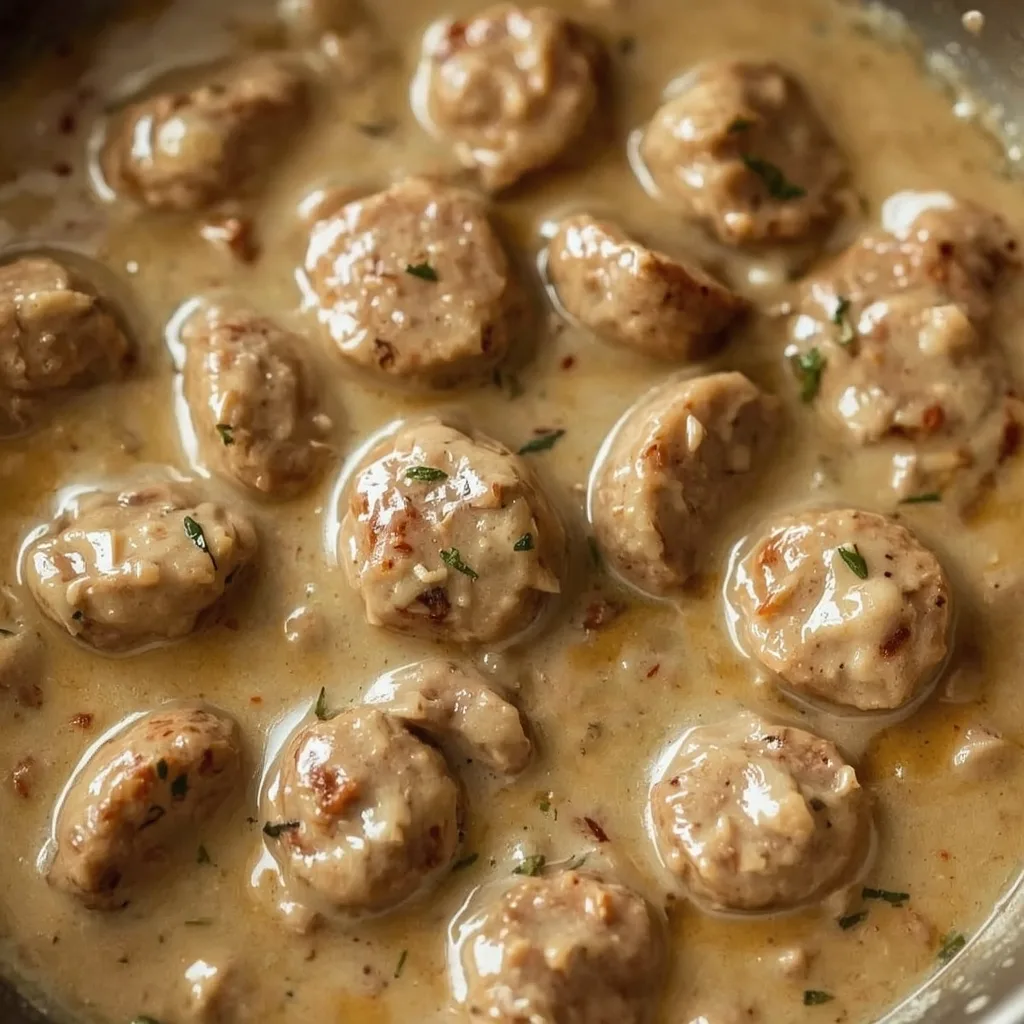
 Alton Brown Sausage Gravy delivers a rich, creamy texture with deep savory flavor, thanks to perfectly browned turkey sausage and a classic butter-and-flour roux. Seasoned with sage, thyme, and a touch of cayenne, it brings comforting Southern taste to the table without any pork.
The whole process takes just 20 minutes from start to finish, making it an easy win for beginner cooks and busy mornings alike. Getting a smooth, lump-free roux is the only part that requires close attention, and the recipe walks you through it clearly.
What are Alton Brown Sausage Gravy?
This is a stovetop gravy built from ground turkey breakfast sausage, butter, flour, and whole milk. It is thickened by a pale golden roux and seasoned with sage, thyme, black pepper, and a pinch of cayenne. The result is a velvety, peppery sauce with a hearty sausage crumble throughout. It fits right into the Southern cream gravy tradition but swaps the usual pork for leaner turkey.
Why You Should Try This Recipe
- Quick and straightforward — You can go from raw ingredients to finished gravy in about 20 minutes, with only one pan to clean.
- Leaner without losing flavor — Turkey sausage keeps the fat content lower than traditional pork versions, but the browned bits and seasoned roux still give it deep, satisfying taste.
- No special equipment needed — A 10-inch cast iron skillet or any heavy-bottomed pan does the job. No thermometer, no blender, no fuss.
- Built‑in versatility — The same base gravy adapts easily to swaps in protein, milk type, or spice level, so you can make it your own without rewriting the recipe.
- Reliable texture every time — The two‑minute roux cook and the slow whisking of cold milk into hot fat create a silky, lump‑free consistency that holds up well on the plate.
Ingredients Needed to Make Alton Brown Sausage Gravy
Every ingredient here plays a specific role in building flavor, body, or balance. Below is what you need and why each one matters.
Protein Base
- 1 lb (16 oz) ground turkey breakfast sausage — This is the backbone of the gravy. The rendered fat from browning the sausage stays in the pan and forms the flavorful foundation for the roux. Look for breakfast‑style turkey sausage with sage already added if you want a head start on seasoning.
Roux Building
- ¼ cup unsalted butter — Adds richness and helps the flour cook evenly without scorching. Unsalted butter lets you control the final salt level.
- ¼ cup all-purpose flour — Thickens the milk into a creamy gravy. Cook it for a full two minutes to remove the raw flour taste and develop a nutty aroma.
Liquid Base
- 2 cups whole milk — Provides the creamy body and mouthfeel that define this gravy. Whole milk gives the best thickness; lower‑fat milk will produce a thinner result.
Seasoning
- ½ teaspoon kosher salt — Enhances all the other flavors. Start with this amount and adjust after tasting.
- ½ teaspoon freshly ground black pepper — A generous amount of pepper is classic in this style of gravy. Freshly ground adds more aroma than pre‑ground.
- ½ teaspoon dried sage — Brings the earthy, slightly floral note that pairs naturally with breakfast sausage.
- ¼ teaspoon dried thyme — Adds a subtle lemony‑herbal layer that rounds out the sage.
- ⅛ teaspoon cayenne pepper (optional) — A tiny pinch of heat that wakes up the other flavors without making the gravy spicy. Leave it out if you prefer a milder bowl.
Step by Step Instructions to Prepare Alton Brown Sausage Gravy
These steps move quickly, so it helps to have all your ingredients measured and within reach before you start. The key is controlling the heat at each stage.
- Brown the sausage — Place a 10‑inch cast iron skillet or heavy‑bottomed skillet over medium heat. Add the turkey sausage and cook, breaking it into small crumbles with a wooden spoon, until browned and cooked through, about 6 to 8 minutes. Do not drain the rendered fat; it is essential for flavor and the roux.
- Build the roux — Reduce the heat to medium‑low. Add the butter to the skillet and stir until completely melted. Sprinkle the flour evenly over the sausage and butter mixture, then cook, stirring constantly, for 2 minutes. This eliminates the raw flour taste and creates a pale golden roux that should smell nutty.
- Whisk in the milk — Slowly pour in the whole milk while whisking vigorously to prevent lumps. Continue whisking until the gravy thickens and reaches a gentle simmer, about 3 to 4 minutes. The gravy should coat the back of a spoon thickly enough to hold a line drawn with your finger.
- Season and finish — Stir in the salt, black pepper, sage, thyme, and cayenne if using. Taste and adjust seasoning with additional salt and pepper if desired. Let the gravy simmer for 1 more minute, then remove from heat. The gravy will continue to thicken slightly as it cools.
- Rest before serving — Remove from heat and let rest for 1 to 2 minutes before serving. This allows the flavors to meld and the texture to settle to its final consistency.

What Goes Well With Alton Brown Sausage Gravy
This gravy has a rich, peppery profile that pairs naturally with foods that can soak it up or cut through its creaminess. Here are a few ideas that work especially well.
- Fluffy buttermilk biscuits — The iconic pairing. Split a warm biscuit open and ladle gravy right over the top so it seeps into every layer.
- Crispy roasted potatoes — Golden, crunchy‑outside potatoes give you a contrast in texture that balances the smooth gravy.
- Soft scrambled eggs — A spoonful of gravy over soft eggs adds richness without overwhelming the delicate curds.
- Cornbread — A square of slightly sweet cornbread provides a nice counterpoint to the savory, peppery gravy.
- Steamed greens or a simple salad — A bright, acidic side like sautéed collard greens or a lemony arugula salad cuts through the gravy’s richness.
- Grits or polenta — Creamy grits make a warm, neutral base that lets the gravy’s seasoning stand out.
Essential Tips for Perfecting Alton Brown Sausage Gravy
- Do not drain the sausage fat — That rendered fat carries the browned flavor and is the real base of the roux. Pouring it off leaves the gravy flat and thin.
- Keep the heat at medium‑low for the roux — Medium‑high heat will brown the flour too fast and create a dark roux with a toasted flavor that overpowers the turkey sausage. Low and slow gives you a pale golden color and a nutty aroma.
- Whisk the milk in slowly — Adding it all at once shocks the hot roux and causes lumps. A steady stream with constant whisking keeps the mixture smooth from the start.
- Let the gravy rest after cooking — The 1‑ to 2‑minute rest off the heat lets the starch molecules relax and the texture settle into its final creamy consistency. Skipping this step leaves it slightly looser than intended.
- Taste before adding more salt — Breakfast sausage often contains salt already. Season with the measured salt first, then taste and adjust only if needed.
- Use a heavy‑bottomed skillet — Cast iron or a thick stainless‑steel pan distributes heat evenly and prevents hot spots that can scorch the milk or burn the roux.
- Reheat with a splash of milk — Refrigerated gravy thickens as the starch sets. Whisking in a small amount of milk while reheating brings back the original pour‑able texture without making it watery.
Variations of Alton Brown Sausage Gravy
- Spicy chorizo version — Swap the turkey breakfast sausage for soy‑based or chicken chorizo. The paprika and chili in the chorizo change the flavor profile completely and give the gravy a reddish tint.
- Herb‑forward variation — Double the dried sage and thyme, and add a teaspoon of fresh chopped rosemary at the end. The extra herbal punch works well if you are serving the gravy with roasted vegetables.
- Dairy‑free adaptation — Replace the whole milk with unsweetened oat milk or cashew milk, and use a plant‑based butter stick. The gravy will be slightly less thick but still creamy. Whisk an extra minute to help it set.
- Mushroom and onion version — Sauté 1 cup of finely chopped mushrooms and ½ cup of diced onion along with the turkey sausage. The mushrooms add a savory, almost meaty depth that complements the sage.
- Smoked paprika and garlic twist — Add ½ teaspoon of smoked paprika and one minced garlic clove after the roux cooks. The smokiness mimics the flavor of traditional pork sausage without adding any meat.
- Extra‑peppery Southern style — Increase the black pepper to a full teaspoon and add ¼ teaspoon of white pepper. The double pepper gives the gravy a pronounced, classic diner‑style kick.
Storing Alton Brown Sausage Gravy: Best Practices
- Refrigerate in an airtight container — Transfer cooled gravy to a container with a tight‑fitting lid and store for up to 4 days. Press plastic wrap directly onto the surface before sealing to prevent a skin from forming.
- Freeze in a zip‑top bag — Pour fully cooled gravy into a freezer‑safe zip‑top bag, squeeze out the air, seal flat, and freeze for up to 3 months. Laying the bag flat helps it thaw evenly and saves space.
- Label with the date — Write the date and contents on the bag or container before freezing. Gravy can develop off‑flavors if stored past three months, even if it looks fine.
- Thaw overnight in the refrigerator — Move the frozen gravy from the freezer to the fridge the night before you plan to use it. Gradual thawing keeps the texture smooth and prevents separation.
- Portion into smaller containers — Divide the gravy into single‑serving portions before freezing. This way you only thaw what you need without risking the rest.
Reheating Alton Brown Sausage Gravy: Best Practices
- Stovetop method — Transfer the gravy to a skillet over medium‑low heat. Whisk in a splash of milk (about 1 tablespoon per cup of gravy) and stir constantly until warmed through, about 4 to 5 minutes. The milk restores the original silky consistency.
- Microwave method — Place the gravy in a microwave‑safe bowl, cover with a damp paper towel, and heat in 30‑second bursts on medium power. Stir well between each burst to redistribute the heat and prevent hot spots. Total time is usually 1½ to 2 minutes.
- Double‑boiler method — For the gentlest reheating, place the gravy in a heatproof bowl set over a pot of simmering water. Stir occasionally until hot, about 6 to 8 minutes. This method virtually eliminates the risk of scorching.
- Direct‑from‑frozen stovetop — If you did not thaw the gravy overnight, place the frozen block in a skillet over low heat with 2 tablespoons of milk. Cover and let it melt slowly, breaking it apart with a spatula as it softens, then whisk until smooth.
FAQs
Can I freeze Alton Brown Sausage Gravy?
Yes, it freezes well for up to 3 months. Cool the gravy completely, transfer to a zip‑top bag, squeeze out the air, and freeze flat. Thaw overnight in the refrigerator and reheat with a splash of milk.
Why is my gravy lumpy?
Lumps usually come from adding the milk too quickly or not whisking vigorously enough. Pour the milk in a slow, steady stream while whisking constantly. If lumps already formed, whisk vigorously or use an immersion blender to smooth them out.
How long does Alton Brown Sausage Gravy last in the fridge?
Stored in an airtight container, it stays fresh for up to 4 days. The gravy will thicken as it sits, so add a small splash of milk when reheating to bring back the original consistency.
Can I use low‑fat or non‑dairy milk instead of whole milk?
You can, but the gravy will be thinner. Whole milk gives the creamiest, most stable texture. If using low‑fat or plant‑based milk, cook the gravy an extra minute to help it thicken, and expect a slightly looser consistency.
Do I have to use a cast iron skillet?
No, but a heavy‑bottomed skillet works best. Cast iron and tri‑ply stainless steel hold heat evenly and prevent the roux from scorching. Thin non‑stick pans create hot spots that can burn the butter or milk.
Can I make this gravy ahead of time for a crowd?
Absolutely. Make it a day ahead, cool quickly, and refrigerate. Reheat gently on the stovetop with a splash of milk, whisking until smooth. The flavors actually meld and deepen overnight, so many cooks prefer it that way.
Final Words
This Alton Brown Sausage Gravy proves that a few simple ingredients and careful technique can deliver something truly satisfying in under half an hour. The turkey sausage keeps it lighter, while the roux and seasonings give it all the rich, peppery comfort you expect. Give it a try on a relaxed morning — you will likely find yourself coming back to it again and again.
Print
Alton Brown’s Turkey Sausage Gravy
- Prep Time: 5
- Cook Time: 15
- Total Time: 20
- Yield: 4 1x
- Category: Breakfast
- Method: Stovetop
- Cuisine: American
Description
This rich, creamy gravy gets its depth from perfectly browned turkey sausage and a classic roux. Seasoned with sage, thyme, and a touch of cayenne, it delivers the comforting Southern flavor without pork.
Ingredients
- 1 lb (16 oz) ground turkey breakfast sausage
- 1/4 cup unsalted butter
- 1/4 cup all-purpose flour
- 2 cups whole milk
- 1/2 teaspoon kosher salt
- 1/2 teaspoon freshly ground black pepper
- 1/2 teaspoon dried sage
- 1/4 teaspoon dried thyme
- 1/8 teaspoon cayenne pepper (optional)
Instructions
- Place a 10-inch cast iron skillet or heavy-bottomed skillet over medium heat. Add the turkey sausage and cook, breaking it into small crumbles with a wooden spoon, until browned and cooked through, about 6 to 8 minutes. Do not drain the rendered fat; it is essential for flavor and the roux.
- Reduce the heat to medium-low. Add the butter to the skillet and stir until completely melted. Sprinkle the flour evenly over the sausage and butter mixture, then cook, stirring constantly, for 2 minutes. This eliminates the raw flour taste and creates a pale golden roux that should smell nutty.
- Slowly pour in the whole milk while whisking vigorously to prevent lumps. Continue whisking until the gravy thickens and reaches a gentle simmer, about 3 to 4 minutes. The gravy should coat the back of a spoon thickly enough to hold a line drawn with your finger.
- Stir in the salt, black pepper, sage, thyme, and cayenne if using. Taste and adjust seasoning with additional salt and pepper if desired. Let the gravy simmer for 1 more minute, then remove from heat. The gravy will continue to thicken slightly as it cools.
- Remove from heat and let rest for 1 to 2 minutes before serving. This allows the flavors to meld and the texture to settle to its final consistency.
Notes
Refrigerate leftovers in an airtight container for up to 4 days. To reheat, transfer to a skillet over medium-low heat, whisking in a splash of milk if the gravy has thickened too much. Freeze in a zip-top bag for up to 3 months; thaw overnight in the refrigerator and reheat as directed.
Nutrition
- Calories: 393
- Sugar: 6g
- Sodium: 648mg
- Unsaturated Fat: 11g
- Trans Fat: 26g
- Carbohydrates: 12g
- Fiber: 0g
- Protein: 20g
- Cholesterol: 143mg
Keywords: sausage gravy, turkey sausage gravy, southern gravy, breakfast gravy, stovetop gravy, creamy gravy, no pork gravy, alton brown inspired, turkey sausage, comfort food