 Anabelle McLean
 Alton Brown Bagels bring the authentic New York-style bagel experience straight to your home kitchen without any fancy equipment. These homemade bagels deliver that signature crisp exterior with a dense, chewy interior that rivals any bakery version.
The entire process takes about 2 hours and 25 minutes from start to finish, with only 40 minutes of active hands-on time. This is an intermediate-level recipe mainly because the floating test and boiling step require a bit of attention, but the ingredient list is refreshingly simple.
What is Alton Brown Bagels?
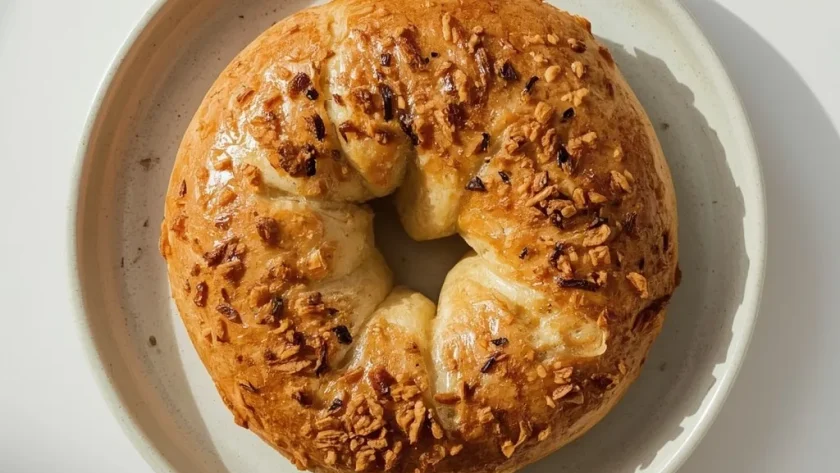
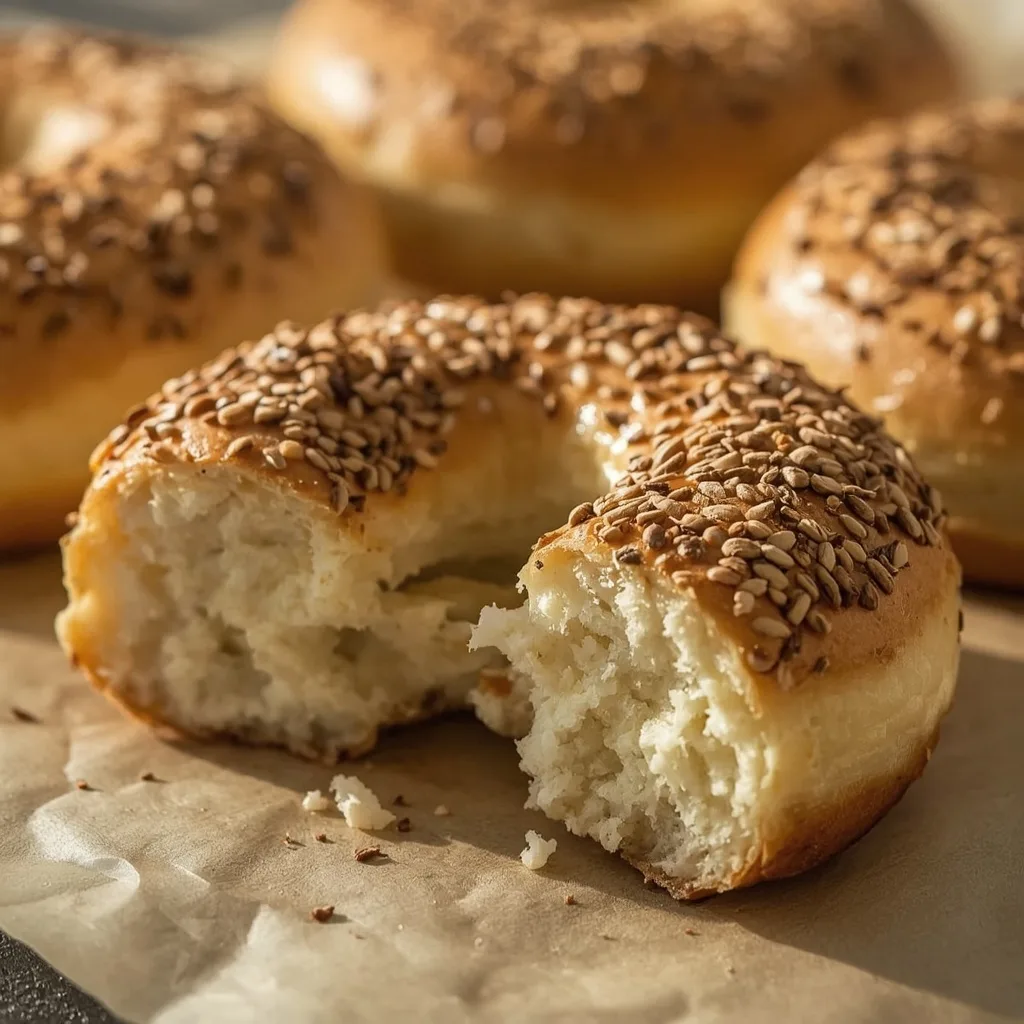
Alton Brown Bagels are small-batch, hand-formed bagels made from a straightforward dough of bread flour, yeast, honey, and salt. The key technique involves boiling the shaped dough in alkaline water before baking, which creates that distinctive shiny, crisp crust and dense interior. Each bagel has a deep golden-brown exterior with a soft, airy crumb that feels substantial without being heavy.
Why You Should Try This Recipe
- Small batch perfection — This recipe makes exactly 4 bagels, so you get fresh results without committing to a massive batch.
- Minimal ingredients — You likely have everything already: bread flour, yeast, honey, salt, baking soda, and an egg white for the wash.
- Authentic texture — The boiling step creates that signature chewy crumb and glossy crust that defines a true bagel.
- Complete control — Adjust toppings, size, and bake time exactly how you want without depending on a bakery.
Ingredients Needed to Make Alton Brown Bagels
Here is everything you will need, broken down by category to keep things organized.
For the Dough
- 1 1/2 cups bread flour (plus more for dusting) — Bread flour provides the high protein content needed for that chewy bagel texture. All-purpose flour will work in a pinch but produces a softer result.
- 1 teaspoon active dry yeast — Make sure your yeast is fresh and properly proofed. Old yeast will leave you with dense, flat bagels.
- 1/2 cup warm water (110°F / 43°C) — Warm water activates the yeast without killing it. Too hot and you will kill the yeast; too cool and it will not activate properly.
- 1 tablespoon honey — Honey feeds the yeast and adds a subtle sweetness that balances the savory notes. Maple syrup works as a substitute.
- 1 teaspoon kosher salt — Salt controls yeast activity and strengthens the dough structure. Use fine sea salt if that is what you have, but reduce to 3/4 teaspoon.
For Boiling and Finishing
- 2 quarts water — Use enough water to give the bagels room to float without sticking together.
- 1 tablespoon baking soda — This alkalizes the water, creating the glossy, crackly crust that makes bagels distinct from regular bread.
- 1 large egg white (for wash, optional) — Brushing the boiled bagels with egg white gives them an extra-shiny, bakery-style finish. Skip it for a matte crust.
Step by Step Instructions to Prepare Alton Brown Bagels
Follow these steps in order, and you will have beautiful homemade bagels in a few hours. Pay closest attention to the floating test — it tells you exactly when the dough is ready to boil.
- Proof the yeast — Combine the warm water (110°F / 43°C), active dry yeast, and honey in a small bowl. Let it stand for 5 to 10 minutes until foamy and fragrant. If no foam appears, your yeast is dead — start over with fresh yeast.
- Mix the dough — Whisk together the bread flour and kosher salt in a large bowl. Pour in the yeast mixture and stir with a wooden spoon until a shaggy, dry-looking dough forms. If it is too dry to come together, add water 1 teaspoon at a time.
- Knead until smooth — Turn the dough onto a lightly floured surface. Knead by pushing with the heel of your hand, folding, and repeating for 8 to 10 minutes. The dough should become smooth and supple and pass the windowpane test — when stretched thin, it should not tear easily.
- First rise — Shape the dough into a smooth ball and place it in a lightly oiled bowl, turning once to coat. Cover with plastic wrap or a damp towel and let it rise in a warm, draft-free spot for 1 hour, or until doubled in size. A properly proofed dough will spring back slowly when poked.
- Shape the bagels — Punch down the dough gently, then turn it onto a clean surface. Divide into 4 equal pieces (each about 4 ounces / 110 grams). Roll each piece into a tight ball, then poke your thumb through the center to create a hole; gently stretch the ring to about 2 inches in diameter, keeping it uniform.
- Rest and test — Place the shaped bagels on a parchment-lined baking sheet with at least 2 inches of space between them. Cover loosely with plastic wrap and let rest for 10 to 30 minutes. To test readiness, drop a bagel into a bowl of cold water — if it floats, it is ready to boil.
- Preheat and prepare the boil — Preheat your oven to 425°F / 218°C. Bring 2 quarts of water to a rolling boil in a large, wide pot. Stir in the baking soda (it will foam up) and reduce the heat to a gentle boil.
- Boil the bagels — Carefully lower bagels into the boiling water, one or two at a time — do not overcrowd. Boil for 30 seconds, then flip and boil for another 30 seconds. Use a slotted spoon or spider to remove them, letting excess water drip off, and transfer to a greased or parchment-lined baking sheet.
- Bake — If desired, whisk the egg white with 1 teaspoon of water and brush it over the tops for a glossy finish. Bake on the middle rack for 15 to 20 minutes, rotating the pan halfway through, until deep golden brown and hollow-sounding when tapped on the bottom.
- Cool completely — Transfer the baked bagels to a wire rack and let them cool completely, at least 30 minutes, before slicing. Cooling prevents the interior from becoming gummy and sets the final chewy texture.
What Goes Well With Alton Brown Bagels
These bagels are versatile enough for breakfast, brunch, or a satisfying snack. Here are some classic pairings that complement their chewy texture and mild flavor.
- Smoked salmon and cream cheese — The rich, fatty salmon balances the dense bagel, while cream cheese adds a cool, tangy contrast. Capers and red onion slices finish the combination perfectly.
- Butter and jam — A simple, classic pairing that lets the bagel’s texture shine. Use salted butter for depth and your favorite fruit jam for sweetness.
- Scrambled eggs and chives — Soft, fluffy eggs contrast nicely with the crisp bagel exterior. Fresh chives add a mild onion note that works with any filling.
- Cream cheese with fresh herbs — Mix chopped dill, chives, and parsley into softened cream cheese. Let it sit for 15 minutes before spreading so the flavors meld.
- Avocado and everything seasoning — Mashed avocado with a squeeze of lemon and a generous sprinkle of everything bagel seasoning makes a modern, satisfying topping.
- Cucumber and herb spread — Thin cucumber slices on a herbed goat cheese or dairy-free spread create a light, refreshing open-faced sandwich.
Essential Tips for Perfecting Alton Brown Bagels
- Check your yeast first — Always proof the yeast in warm water with honey before adding flour. If the mixture does not foam within 10 minutes, discard it and start with fresh yeast. Dead yeast produces dense, hockey-puck bagels.
- Knead until the windowpane forms — Under-kneaded dough will not hold its shape during boiling or baking. Stretch a small piece of dough thin enough to see light through — if it tears, keep kneading for another 2 minutes.
- Do not skip the floating test — Drop a shaped bagel into cold water before boiling. If it sinks, let all the bagels rest another 5 to 10 minutes and test again. Floating means the interior structure is properly developed.
- Boil at a gentle boil, not a rolling boil — A vigorous boil can deflate the bagels and make them wrinkly. The water should be gently bubbling with small bubbles rising to the surface.
- Flip halfway through baking — Rotating the baking sheet from front to back after 8 to 10 minutes ensures even browning. Ovens often have hot spots that can burn one side.
- Cool on a wire rack, not the baking sheet — Leaving bagels on the hot sheet traps steam and makes the bottom soggy. A wire rack allows air to circulate, keeping the crust crisp all around.
- Slice only after fully cooled — Cutting into a warm bagel compresses the interior and creates a gummy texture. Wait the full 30 minutes — the difference is noticeable.
Variations of Alton Brown Bagels
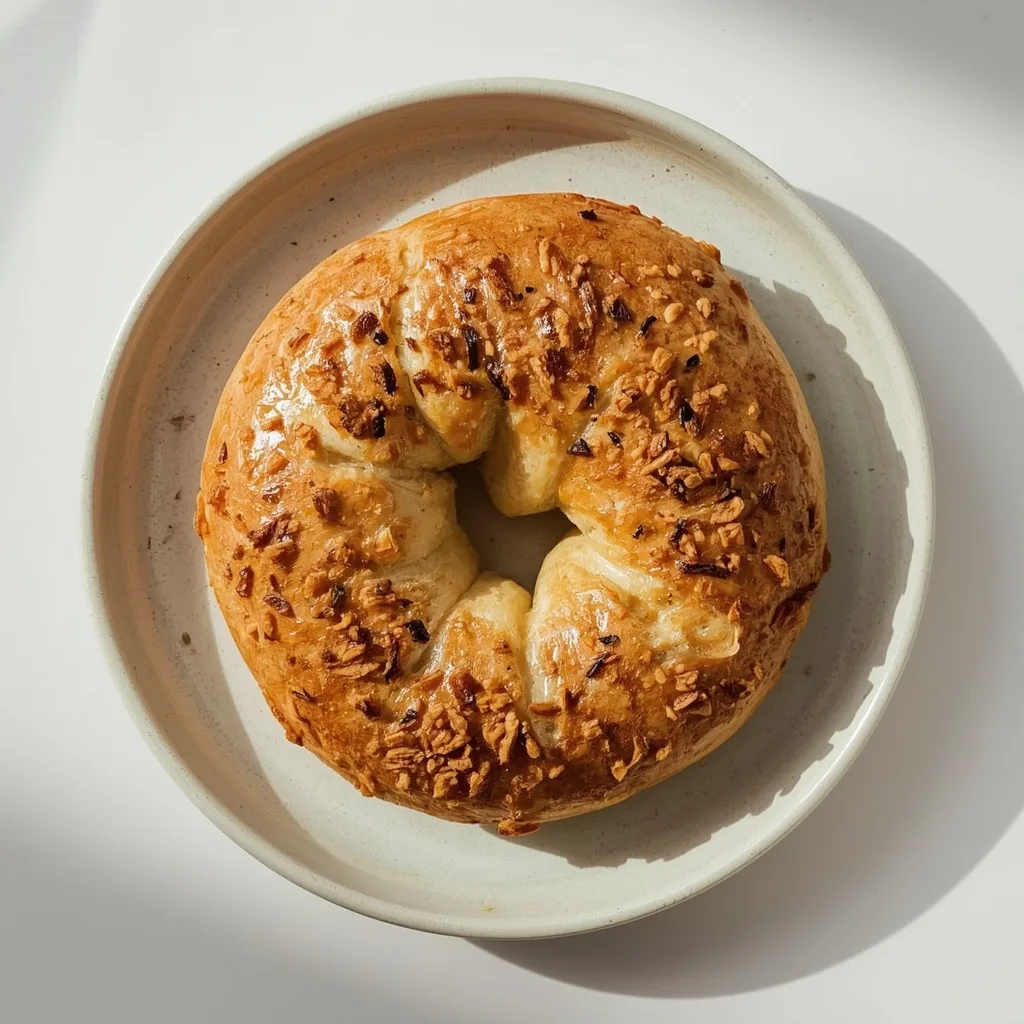
- Everything bagel — After boiling and egg wash, sprinkle generously with a mix of sesame seeds, poppy seeds, dried garlic flakes, dried onion flakes, and coarse salt. Press gently so the toppings stick during baking.
- Cinnamon raisin bagel — Add 1/2 teaspoon ground cinnamon and 1/4 cup raisins to the flour mixture before adding the yeast liquid. Reduce the salt to 3/4 teaspoon so the cinnamon flavor shines.
- Garlic and herb bagel — Mix 1 teaspoon dried garlic powder and 1 tablespoon dried parsley into the flour. After boiling, brush with olive oil instead of egg wash and sprinkle with flaky salt.
- Sesame seed bagel — After the egg wash, dip the top of each boiled bagel into a shallow dish filled with white or black sesame seeds. Toast the seeds lightly in a dry pan first for deeper flavor.
- Jalapeño cheddar bagel — Fold 1/4 cup shredded sharp cheddar and 1 tablespoon finely diced pickled jalapeños into the dough during the last minute of kneading. Reduce salt slightly as cheddar adds saltiness.
- Whole wheat bagel — Substitute 3/4 cup whole wheat flour for 3/4 cup of the bread flour. Add an extra tablespoon of warm water, as whole wheat absorbs more moisture, and knead for 2 minutes longer.
Storing Alton Brown Bagels: Best Practices
- Room temperature storage — Place completely cooled bagels in a sealed plastic bag. They stay fresh at room temperature for up to 3 days. If the bagels are still warm, condensation will make the crust soft and chewy rather than crisp.
- Freezing for longer storage — Wrap each bagel individually in plastic wrap, then place them all in a freezer bag. Squeeze out as much air as possible before sealing. Properly wrapped, they keep for up to 3 months without freezer burn.
- Pre-sliced freezing — Slice bagels in half before freezing for easier toasting later. Place a small piece of parchment between the halves so they do not stick together in the freezer.
- Refrigeration caution — Avoid storing bagels in the refrigerator if possible. The cold, dry air accelerates staling and makes them turn hard and rubbery within 24 hours. Freezing works much better for storage beyond 3 days.
Reheating Alton Brown Bagels: Best Practices
- Toaster method — For a split bagel, toast directly in a standard toaster on medium-high setting for 2 to 3 minutes. Watch closely as the high sugar content from honey can burn quickly.
- Oven method — Wrap whole bagels in aluminum foil and warm them in a 350°F / 177°C oven for 5 minutes. Unwrap for the last minute if you want a crisper exterior.
- Broiler method — Split the bagel and place cut-side up on a baking sheet. Broil 4 to 5 inches from the heating element for 1 to 2 minutes. Keep an eye on it — the broiler works fast and can scorch the top.
- Air fryer method — Set the air fryer to 300°F / 149°C and warm a whole bagel for 3 to 4 minutes. For a split bagel, reduce time to 2 minutes. This method restores the crisp exterior without drying out the interior.
FAQs
Can I use all-purpose flour instead of bread flour?
Yes, but the bagels will be less chewy and more bread-like. Bread flour has higher protein content, which develops more gluten and creates that signature dense interior. If you use all-purpose, add an extra tablespoon of water to the dough.
How do I know if my yeast is still active?
Combine the warm water, yeast, and honey, then wait 5 to 10 minutes. The mixture should become foamy and smell distinctly yeasty. If you see no bubbles or foam, the yeast is dead and will not leaven the bagels properly.
Do I have to boil the bagels?
Yes, the boiling step is essential for achieving the classic bagel texture and crust. Boiling sets the exterior starch, which creates the shiny crust and prevents the bagels from expanding too much in the oven. Skipping this step gives you dense bread rolls, not bagels.
Can I freeze Alton Brown Bagels after baking?
Absolutely. Cool the bagels completely, then wrap each one individually in plastic wrap and place them in a freezer bag. They stay fresh for up to 3 months. Thaw at room temperature or toast directly from frozen.
Why did my bagels come out flat and dense?
This usually happens for one of two reasons: the yeast was dead and the dough did not rise properly, or the dough was over-proofed and collapsed during boiling. Check your yeast freshness and stick to the 1-hour first rise — do not leave it longer than 90 minutes.
How long do Alton Brown Bagels last at room temperature?
Stored in a sealed plastic bag at room temperature, they stay fresh for up to 3 days. After that, the texture starts to dry out and become stale. Freezing is your best option for longer storage.
Final Words
Making Alton Brown Bagels at home gives you that bakery-quality texture without leaving your kitchen. The process is straightforward once you understand the floating test and keep an eye on your yeast. Give this recipe a try, and you will have fresh, chewy bagels ready for any topping you crave.
Print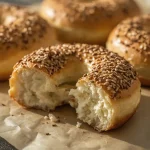
Alton Brown-Style Homemade Bagels
- Prep Time: 20
- Cook Time: 20
- Total Time: 145
- Yield: 4 1x
- Category: Breakfast
- Method: Baking
- Cuisine: American
Description
Crisp on the outside, chewy and dense on the inside, these homemade bagels are boiled then baked to achieve the authentic New York-style texture. Made with a simple dough of bread flour, honey, and yeast, they deliver a golden crust with a soft, airy crumb.
Ingredients
- 1 1/2 cups bread flour (plus more for dusting)
- 1 teaspoon active dry yeast
- 1/2 cup warm water (110°F / 43°C)
- 1 tablespoon honey
- 1 teaspoon kosher salt
- 2 quarts water (for boiling)
- 1 tablespoon baking soda
- 1 large egg white (for wash, optional)
Instructions
- In a small bowl, combine the warm water (110°F / 43°C), active dry yeast, and honey. Let the mixture stand for 5 to 10 minutes until it becomes foamy and fragrant — this proves the yeast is active and alive. If no foam appears, the yeast may be dead; start over with fresh yeast.
- In a large mixing bowl, whisk together the bread flour and kosher salt. Pour in the yeast mixture and stir with a wooden spoon until a shaggy, dry-looking dough forms. If the dough is too dry to come together, add water 1 teaspoon at a time until it forms a cohesive mass.
- Turn the dough out onto a lightly floured work surface. Knead by pushing the dough away with the heel of your hand, folding it over, and repeating for 8 to 10 minutes. The dough should become smooth, supple, and pass the windowpane test — when stretched thin, it should not tear easily.
- Shape the dough into a smooth ball and place it in a lightly oiled bowl, turning once to coat. Cover with plastic wrap or a damp kitchen towel and let it rise in a warm, draft-free spot for 1 hour, or until doubled in size. A properly proofed dough will spring back slowly when gently poked.
- Punch down the dough gently to release gas, then turn it onto a clean surface. Divide it into 4 equal pieces (each about 4 ounces / 110 grams). Roll each piece into a tight ball, then poke your thumb through the center to create a hole; gently stretch the ring to about 2 inches in diameter, keeping it uniform.
- Place the shaped bagels on a parchment-lined baking sheet, leaving at least 2 inches of space between them. Cover loosely with plastic wrap and let them rest at room temperature for 10 to 30 minutes. To test readiness, drop a bagel into a bowl of cold water; if it floats, it is ready to boil.
- While the bagels rest, preheat your oven to 425°F / 218°C and bring 2 quarts of water to a rolling boil in a large, wide pot. Stir in the baking soda (it will foam up) and reduce the heat to a gentle boil. The baking soda alkalizes the water, giving the bagels their distinctive shiny, crisp crust.
- Carefully lower the bagels into the boiling water, one or two at a time — do not overcrowd. Boil for 30 seconds, then flip and boil for another 30 seconds on the second side. Use a slotted spoon or spider to remove the bagels, letting excess water drip off, and transfer them to a greased or parchment-lined baking sheet.
- If desired, whisk the egg white with 1 teaspoon of water and brush it over the tops of the boiled bagels for a glossy, golden finish. Bake on the middle rack for 15 to 20 minutes, rotating the pan halfway through, until the bagels are deep golden brown and sound hollow when tapped on the bottom.
- Transfer the baked bagels to a wire rack and let them cool completely, at least 30 minutes, before slicing. Cooling prevents the interior from becoming gummy and sets the final chewy texture. Serve immediately or store for later use.
Notes
Store completely cooled bagels in a sealed plastic bag at room temperature for up to 3 days, or freeze individually wrapped in plastic wrap and placed in a freezer bag for up to 3 months. To reheat, thaw if frozen, then split and toast directly in a toaster or under the broiler for 1-2 minutes per side. For a softer texture, warm in a 350°F / 177°C oven for 5 minutes.
Nutrition
- Calories: 187
- Sugar: 4.3g
- Sodium: 250mg
- Unsaturated Fat: 0.1g
- Trans Fat: 0.5g
- Carbohydrates: 39.9g
- Fiber: 1.1g
- Protein: 4.9g
- Cholesterol: 0mg
Keywords: homemade bagels, New York bagels, Alton Brown bagels, easy bagel recipe, breakfast, hand-shaped bagels, boiled bagels, bread flour bagels, chewy bagels, bagel breakfast