 Anabelle McLean
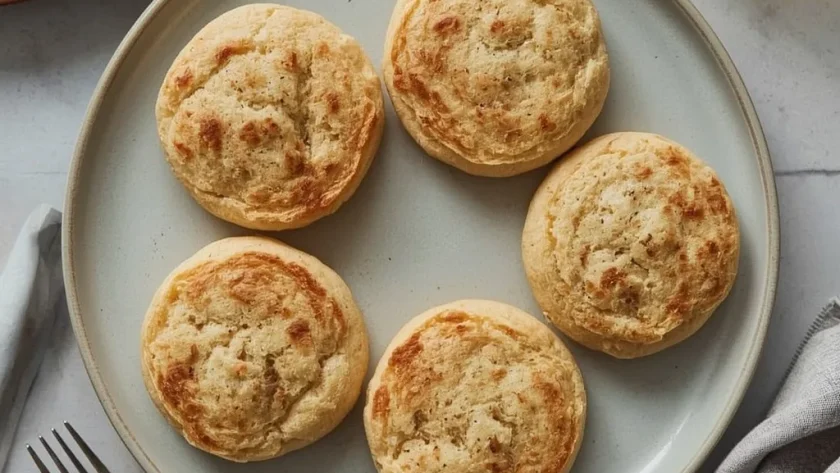
 Alton Brown English Muffins deliver that perfect balance of crisp, cornmeal-dusted exterior and tender, airy interior without leaving your kitchen. The dough comes together with a handful of pantry staples, and a hot griddle does the bulk of the work.
You need about 1 hour 55 minutes total (mostly rise time) for this intermediate-level recipe. The trickiest part is keeping the heat low enough on the griddle so the centers cook through before the outsides burn.
What are Alton Brown English Muffins?
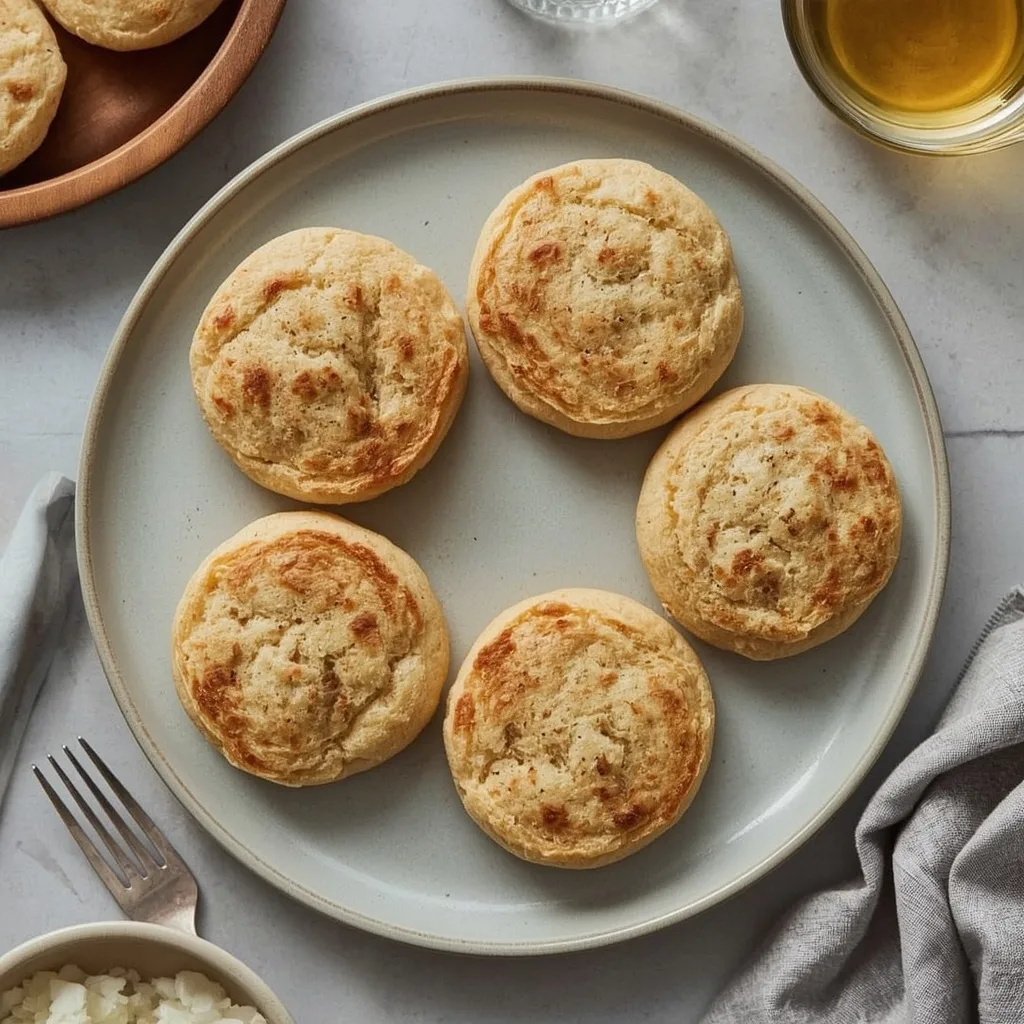
These are stovetop griddle cakes made from a simple yeast dough enriched with nonfat dry milk powder and a touch of butter. The interior stays soft and airy, while the exterior develops a craggy, toasted crust from a cornmeal coating. It is a straightforward American breakfast classic that rewards patience over speed.
Why You Should Try This Recipe
Here is what makes this version worth your time.
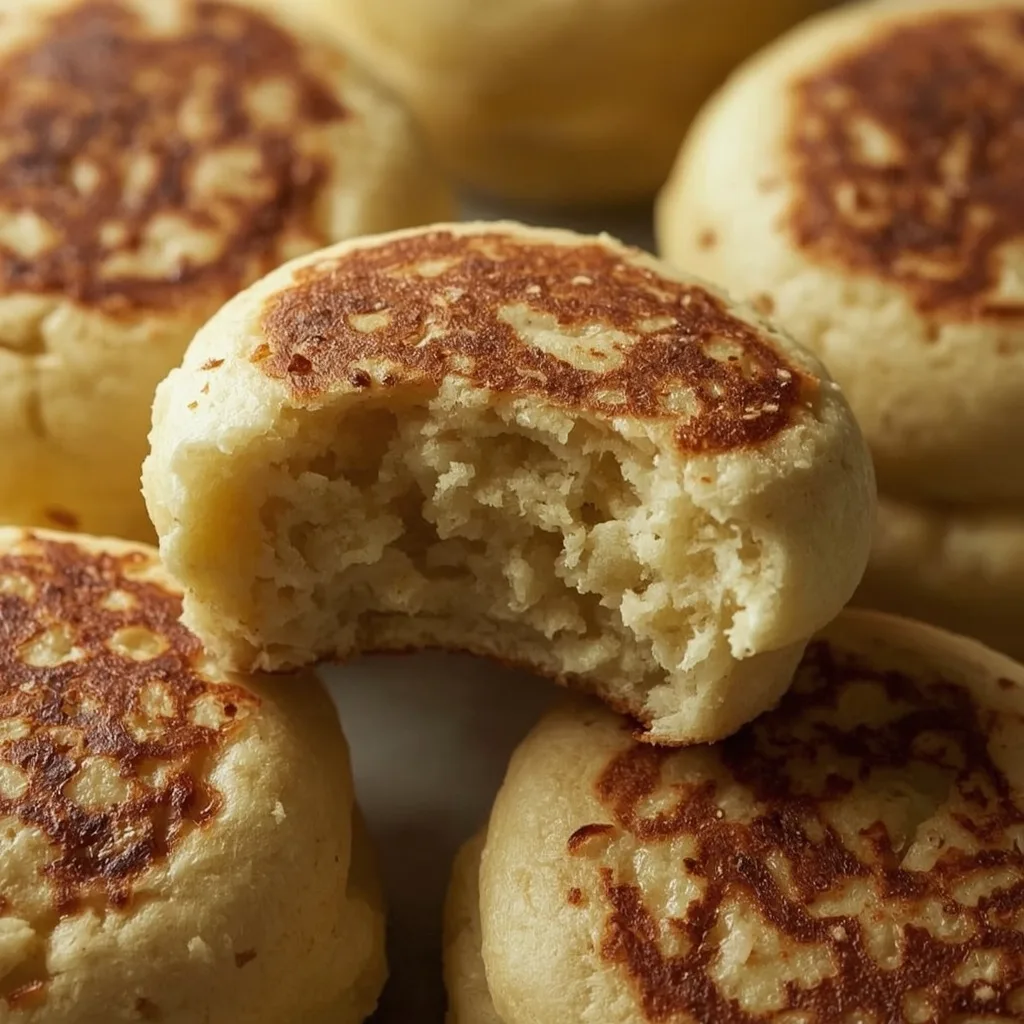
- Better texture than store-bought — Real nooks and crannies form when you split these by hand, which trap butter and jam far better than any commercial version.
- Simple pantry ingredients — You likely have flour, sugar, salt, yeast, butter, and cornmeal already. The only specialty item is nonfat dry milk powder, which keeps for months in the fridge.
- No oven required for the main cook — A griddle or cast-iron pan on low heat does the work. The oven only steps in for a quick 10-minute finish to guarantee the centers are fully set.
- Freezer-friendly for busy mornings — These muffins freeze beautifully for up to 3 months. Toast one straight from the freezer for a fresh-made breakfast in minutes.
Ingredients Needed to Make Alton Brown English Muffins
Every ingredient in this list plays a specific role in the texture or flavor. Use the exact measurements listed below for the best results.
Dry Base and Leavening
- 3 cups all-purpose flour (15 ounces / 425 grams) — All-purpose gives the ideal chewy-tender crumb. Bread flour will make them too tough; cake flour will make them fall apart.
- 1/4 cup nonfat dry milk powder — This adds a subtle tang and helps the muffins brown evenly on the griddle without drying out.
- 1 tablespoon granulated sugar — Just enough sweetness to balance the salt and feed the yeast. Do not substitute honey or maple syrup here — they add too much moisture.
- 1 teaspoon kosher salt — Kosher salt dissolves evenly and seasons the dough without leaving harsh pockets. Reduce to 3/4 teaspoon if using table salt.
- 1 teaspoon instant yeast — Instant yeast mixes directly with the dry ingredients and needs no proofing. Active dry yeast works too — just proof it in the warm water first.
Liquid and Fat
- 1 cup lukewarm water (8 ounces / 240 milliliters, about 100°F / 38°C) — Warm water wakes up the yeast instantly. Too hot (above 110°F / 43°C) will kill it, and cold water will slow the rise dramatically.
- 2 tablespoons unsalted butter, melted and cooled slightly — Melted butter enriches the dough and softens the crumb. Let it cool for a minute or two after melting so it does not heat the water too much.
Coating
- 1/4 cup cornmeal (for dusting) — This gives the signature gritty crust and prevents sticking during the griddle cook. Yellow cornmeal is classic, but white cornmeal works the same way.
Step by Step Instructions to Prepare Alton Brown English Muffins
Follow these steps in order, and do not rush the rest periods. The dough needs that time to develop its structure.
- Mix dry ingredients — In a large bowl, whisk together the flour, nonfat dry milk, sugar, salt, and instant yeast until no clumps of milk powder remain.
- Add wet ingredients — Pour in the lukewarm water and melted butter. Stir with a wooden spoon or rubber spatula until a shaggy, very sticky dough forms, about 30 seconds. Do not add extra flour.
- Knead the dough — Turn it onto a lightly floured surface and knead for 8 to 10 minutes. The dough will start smooth and elastic and should spring back when poked. A bench scraper helps gather it if it sticks.
- First rise — Place the dough in a lightly oiled bowl, cover with plastic wrap or a damp towel, and let it rise in a warm spot (about 75°F / 24°C) until doubled, 1 to 1.5 hours. A finger pressed into the dough should leave an indent that stays.
- Shape and dust — Line a baking sheet with parchment and sprinkle half the cornmeal over it. Deflate the dough gently on a floured counter, divide into 8 equal pieces (about 3.5 ounces / 100 grams each), shape each into a tight ball, then flatten into 3-inch discs about 1/2 inch thick. Place on the cornmeal-lined sheet.
- Bench rest — Sprinkle the tops with remaining cornmeal, cover loosely with oiled plastic wrap, and let rest for 30 minutes. They will puff slightly but not double — this is not a second rise.
- Preheat griddle and oven — Heat a large nonstick or cast-iron griddle over low heat for 5 minutes. Test with a few water drops — they should sizzle gently and evaporate within 10 seconds. Meanwhile, preheat the oven to 350°F (177°C) with a wire rack set inside a baking sheet.
- First side griddle cook — Transfer 4 rested discs to the hot griddle, spaced at least 2 inches apart. Cook for 7 to 10 minutes until the bottoms are deep golden brown and the sides look set. Flip with a thin spatula — do not press down.
- Second side griddle cook — Cook the second side for another 7 to 10 minutes until deep golden brown and the muffin sounds hollow when tapped. Internal temperature should reach about 200°F (93°C) if checked with an instant-read thermometer.
- Oven finish — Transfer cooked muffins to the wire rack in the oven. Repeat with the remaining 4 discs. Once all are on the rack, bake for 10 minutes to fully cook the centers and crisp the crust.
- Cool and serve — Remove from the oven and cool on the rack for at least 10 minutes. For the best texture, split by stabbing a fork all around the circumference, then pull apart — this creates the nooks and crannies.
What Goes Well With Alton Brown English Muffins
The neutral, slightly tangy crumb pairs well with both sweet and savory toppings. Here are a few ways to enjoy them.
- A pat of salted butter and honey — The simplest pairing highlights the cornmeal crust and soft interior without overpowering it.
- Scrambled eggs with fresh herbs — Fluffy eggs with chives or parsley complement the crisp muffin texture without competing.
- Fresh berries and a dollop of yogurt — The bright acidity of berries cuts through the richness of the butter in the dough.
- A hot latte or black coffee — The bitterness of coffee balances the subtle sweetness of the muffin, making it an ideal breakfast or brunch pairing.
- Cream cheese and fruit preserves — The tangy cream cheese mirrors the dry milk flavor, while the preserves add sweetness.
- Smoked salmon with a squeeze of lemon — The briny fish and bright citrus contrast nicely with the tender, warm crumb.
Essential Tips for Perfecting Alton Brown English Muffins
These small adjustments make the difference between a good muffin and a great one. Pay attention to the details below.
- Use a kitchen scale for the flour — Measuring flour by volume can vary by as much as 20 percent, which changes the hydration of the dough. Weighing 425 grams guarantees consistency every time.
- Keep the griddle temperature low — Low heat for the full 7 to 10 minutes per side ensures the centers cook through before the crust burns. If the muffins darken too fast, lower the heat and extend the cook time.
- Do not skip the oven finish — Those 10 minutes in a 350°F (177°C) oven finish cooking the inside fully while the crust stays crisp. Without this step, the centers can remain doughy.
- Resist the urge to press down during cooking — Pressing the muffin with the spatula forces out the airy interior structure and creates a dense, flat muffin. Let it rise naturally on the griddle.
- Use a thin metal spatula for flipping — A thin, flexible spatula slides under the muffin cleanly without tearing the delicate crumb structure. Thick spatulas tend to crush the edges.
- Test doneness by temperature, not color — Golden-brown outsides do not guarantee cooked centers. An instant-read thermometer inserted into the side should read about 200°F (93°C).
Variations of Alton Brown English Muffins
Once you master the base dough, these variations let you customize the flavor without changing the method. Each swap keeps the same griddle-and-oven technique.
- Whole wheat version — Replace 1 cup of all-purpose flour with 1 cup whole wheat flour. Add 2 extra tablespoons of water, as whole wheat absorbs more liquid than all-purpose.
- Cinnamon raisin — Add 1 teaspoon ground cinnamon to the dry ingredients and fold in 1/2 cup plump raisins after kneading. The raisins add sweetness without extra sugar.
- Sourdough twist — Substitute 1/2 cup of the lukewarm water with 1/2 cup active sourdough starter and reduce the instant yeast to 1/2 teaspoon. Expect a slightly longer first rise.
- Cheese and herb — Knead in 1/2 cup shredded sharp cheddar and 1 tablespoon chopped fresh rosemary after the dough comes together. The cheese melts into the crumb during griddle cooking.
- Honey oat — Replace the granulated sugar with 1 tablespoon honey and add 1/4 cup rolled oats to the dry ingredients. The oats add texture without making the dough dry.
- Everything bagel seasoning — Brush the tops with a little water before the bench rest and sprinkle with everything bagel seasoning. The sesame, poppy, garlic, and onion flavors transform the muffin into a savory brunch item.
Storing Alton Brown English Muffins: Best Practices
These muffins stay fresh at room temperature for a few days, but the freezer is where they really shine. Store them correctly to preserve that tender interior.
- Countertop in an airtight container — Keep cooled muffins in a sealed container or zip-top bag at room temperature for up to 3 days. Line the container with a paper towel to absorb excess moisture.
- Freezer for long-term storage — Wrap each muffin individually in plastic wrap, then place them all in a freezer-safe zip-top bag. They keep well for up to 3 months without losing texture.
- Refrigerator is not recommended — The cold, dry air of a fridge draws moisture out of the crumb, making muffins stale and tough within a day. Stick to counter or freezer storage.
- Splitting before freezing — Split the muffins with a fork before freezing so you can toast them directly without thawing. This saves a step on busy mornings.
Reheating Alton Brown English Muffins: Best Practices
The goal when reheating is to restore the crisp crust without drying out the soft interior. These methods deliver consistent results.
- Toaster or toaster oven — Split the muffin and toast on medium-high setting until the cut sides are golden and the edges are crisp, about 3 to 4 minutes. This method gives the closest texture to freshly made.
- Oven for larger batches — Arrange split muffins cut-side up on a baking sheet and bake at 350°F (177°C) for 10 minutes. Flip halfway through if you want both sides crunchy.
- Air fryer for extra crunch — Place split muffins in the air fryer basket cut-side up at 350°F (177°C) for 4 to 5 minutes. Check at the 3-minute mark to avoid burning the cornmeal crust.
FAQs
Can I freeze Alton Brown English Muffins?
Yes, they freeze exceptionally well. Wrap each muffin individually in plastic wrap, place them in a freezer bag, and freeze for up to 3 months. Toast straight from frozen without thawing.
Why did my English muffins come out dense and flat?
Several things can cause density: the griddle was too hot and cooked the outside before the inside set, the dough did not rise long enough, or you pressed down with the spatula during cooking. Check your water temperature and griddle heat first.
How long do Alton Brown English Muffins last at room temperature?
They stay fresh for about 3 days in an airtight container at room temperature. After that, the crumb starts to dry out even in a sealed bag. For longer storage, freeze them.
Can I make the dough the night before and bake in the morning?
Yes. After kneading, cover the bowl tightly and refrigerate for up to 12 hours. In the morning, let it sit at room temperature for 30 minutes, then shape and proceed with the bench rest and griddle cooking.
Do I have to use nonfat dry milk powder?
It is important for the tangy flavor and tender crumb. You can substitute with an equal amount of buttermilk powder, but do not use liquid milk — it changes the hydration and makes the dough too wet.
Can I cook these on an electric griddle?
Absolutely. Set an electric griddle to 300°F (149°C) and let it preheat fully. Follow the same cook times and visual cues — deep golden brown bottoms and a hollow sound when tapped.
Final Words
Alton Brown English Muffins deliver that bakery-quality nook-and-cranny texture with a fraction of the effort. The dough is forgiving, the technique is repeatable, and the result is a breakfast staple that toasts up better than anything from a store shelf. Give this recipe a try when you want a weekend project that pays off with every split and toast.
Print
Alton Brown English Muffins
- Prep Time: 15
- Cook Time: 25
- Total Time: 115
- Yield: 4 1x
- Category: Breakfast
- Method: Stovetop
- Cuisine: American
Description
Crisp, craggy-edged griddle cakes with a soft, airy interior — these homemade English muffins are a breakfast classic. The dough uses nonfat dry milk for a subtle tang and tender crumb, while cornmeal gives the signature gritty crust. Toast them up and slather with butter.
Ingredients
- 3 cups all-purpose flour (15 ounces / 425 grams)
- 1/4 cup nonfat dry milk powder
- 1 tablespoon granulated sugar
- 1 teaspoon kosher salt
- 1 teaspoon instant yeast
- 1 cup lukewarm water (8 ounces / 240 milliliters, about 100°F / 38°C)
- 2 tablespoons unsalted butter, melted and cooled slightly
- 1/4 cup cornmeal (for dusting)
Instructions
- In a large mixing bowl, whisk together the flour, nonfat dry milk, sugar, salt, and instant yeast. This evenly distributes the yeast and ensures no clumps of dry milk remain.
- Add the lukewarm water and melted butter. Stir with a wooden spoon or rubber spatula until a shaggy dough forms — about 30 seconds. The dough will be very sticky; do not add extra flour.
- Turn the dough out onto a lightly floured work surface. Knead for 8 to 10 minutes, until the dough becomes smooth, elastic, and springs back when poked. Use a bench scraper to help gather the sticky dough.
- Place the dough in a lightly oiled bowl, cover with plastic wrap or a damp kitchen towel, and let it rise in a warm spot (about 75°F / 24°C) until doubled in size, 1 to 1.5 hours. The dough is ready when you can press a finger into it and the indent remains.
- Line a baking sheet with parchment and sprinkle half of the cornmeal over the surface evenly. Turn the risen dough out onto a lightly floured counter and gently deflate it. Divide into 8 equal pieces (each about 3.5 ounces / 100 grams).
- Shape each piece into a tight ball by pulling the edges into the center and pinching to seal. Flatten each ball into a disc about 3 inches wide and 1/2 inch thick. Place the discs onto the cornmeal-lined baking sheet.
- Sprinkle the tops of the discs with the remaining cornmeal. Cover loosely with oiled plastic wrap and let rest for 30 minutes. They will puff slightly but not double — this is a bench rest, not a second rise.
- Meanwhile, preheat an oven to 350°F (177°C) and set a wire rack inside a second baking sheet. Place a large nonstick or cast-iron griddle over low heat. After 5 minutes, test with a few drops of water — they should sizzle gently and evaporate within 10 seconds.
- Carefully transfer 4 of the rested discs to the hot griddle, spacing them at least 2 inches apart. Cook for 7 to 10 minutes, until the bottoms are deep golden brown and the sides look set. Use a thin spatula to flip. Do not press down.
- Cook the second side for another 7 to 10 minutes, until the other side is also deep golden brown and the muffin sounds hollow when tapped. The internal temperature should reach about 200°F (93°C) if measured with an instant-read thermometer.
- Transfer the cooked muffins to the wire rack set in the oven. Repeat with the remaining 4 discs. Once all muffins are on the rack, bake for 10 minutes — this step ensures the centers are fully cooked and the crust is crisp without drying out the interior.
- Remove the muffins from the oven and let them cool on the rack for at least 10 minutes. For the best texture, serve them split and toasted. To split, stab the side with a fork all around the circumference, then pull apart — this creates the nooks and crannies.
Notes
Store cooled muffins in an airtight container at room temperature for up to 3 days, or freeze for up to 3 months. To reheat, split and toast in a toaster or toaster oven at 400°F (204°C) for 5 minutes, or in a 350°F (177°C) oven for 10 minutes. Do not microwave — they will become chewy.
Nutrition
- Calories: 450
- Sugar: 7g
- Sodium: 200mg
- Unsaturated Fat: 4g
- Trans Fat: 7g
- Carbohydrates: 81g
- Fiber: 3g
- Protein: 13g
- Cholesterol: 16mg
Keywords: English muffins, homemade English muffins, Alton Brown English muffins, breakfast bread, griddle bread, yeast bread, toaster-friendly, American cuisine, no-knead, cornmeal crust