 Anabelle McLean
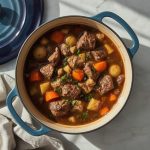
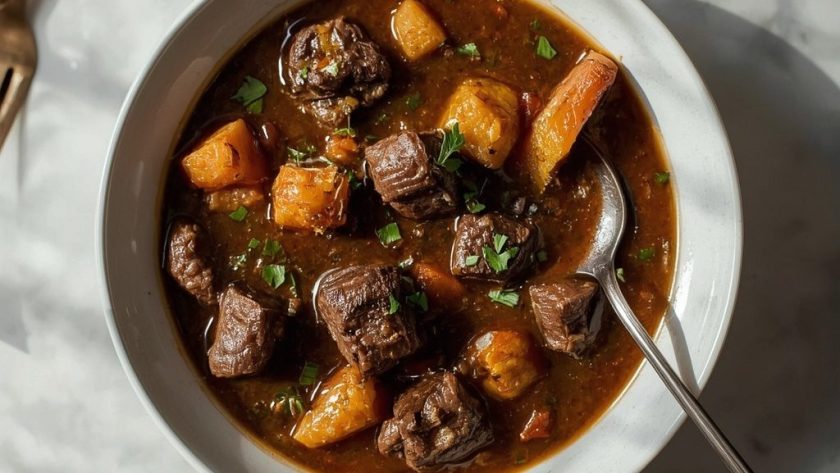
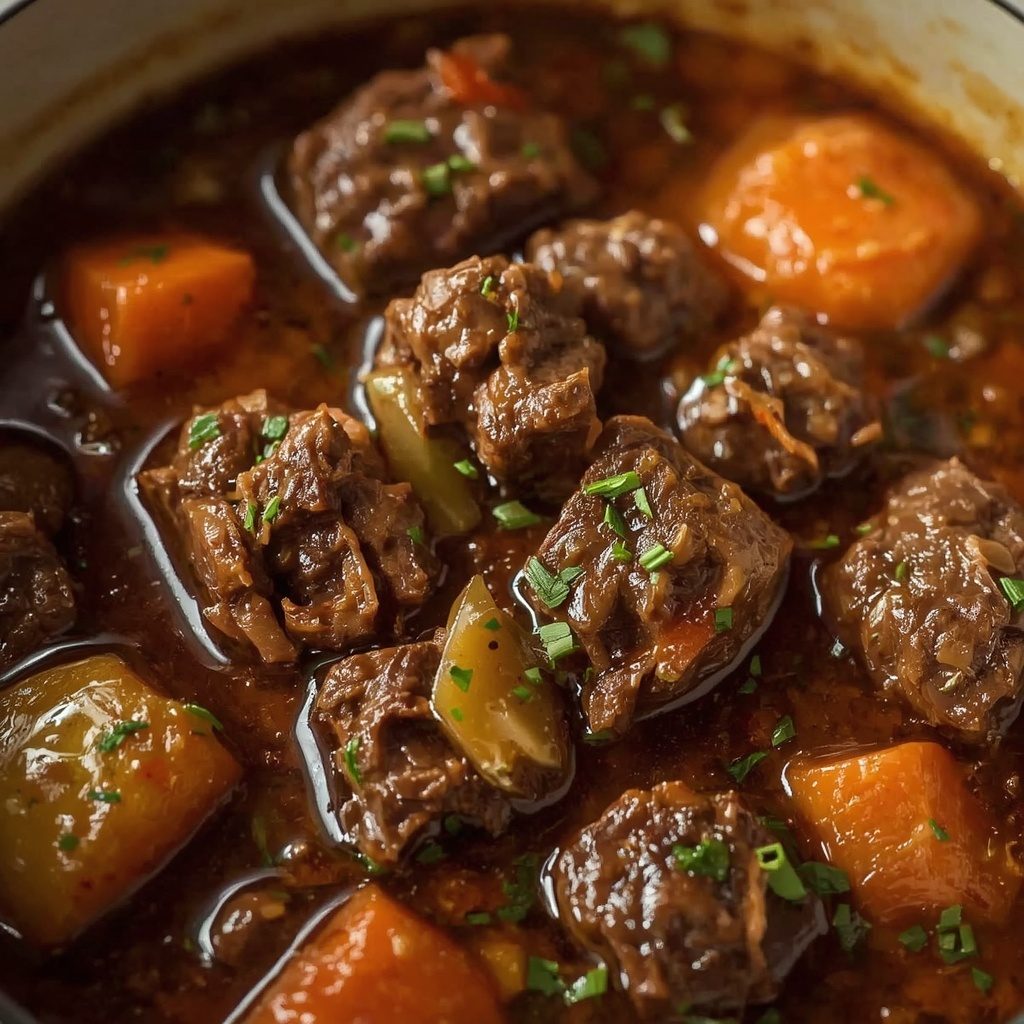
 Alton Brown Beef Stew is a stovetop classic built on hard-seared chuck roast, a deep brown fond, and a slow simmer that turns tough meat fork-tender. There is no pork and no alcohol in this version — just beef broth, tomato paste, Worcestershire sauce, and a handful of aromatics doing all the heavy lifting.
Total time runs about 3 hours, with 30 minutes of that hands-on prep and the rest unsupervised simmering. It is an intermediate recipe mainly because of the searing stage, which rewards patience. Cold-weather dinners, Sunday suppers, or any night you want leftovers that taste better on day two.
What is Alton Brown Beef Stew?
This is a one-pot braise of cubed beef chuck simmered with onions, carrots, celery, potatoes, and a flour-thickened beef broth. The method borrows from Alton Brown’s precision: dry the meat, season it, sear it hard in batches, and build the sauce on the browned bits left behind.
The finished texture is spoonable — meat that shreds with almost no pressure and a gravy that coats the back of a spoon. Flavor leans savory and beefy with a gentle tang from tomato paste and Worcestershire, plus a quiet herbal note from dried thyme and a bay leaf. Make it when the weather turns and you want the kitchen to smell like dinner for three hours.
Why You Should Try This Recipe
- No specialty shopping — every ingredient here comes from a standard grocery store, including the anchovy-based, alcohol-free Worcestershire.
- Hands-off braising — after the sear and the vegetable base, the pot mostly works on its own for close to two hours.
- Better the next day — the gravy thickens and the beef absorbs more seasoning overnight, so leftovers rarely disappoint.
- Flexible on the plate — serve it over egg noodles, with crusty bread, or straight from the bowl with nothing else.
- Freezer-friendly — portions hold up for up to 3 months, which makes it a smart batch-cook for busy weeks.
Ingredients Needed to Make Alton Brown Beef Stew
Eighteen items, grouped by what they do. Nothing here is exotic, but a couple of choices — the cut of beef and the type of potato — genuinely change the outcome.
The Beef
- Beef chuck roast (2 lb) — cut into 1 1/2-inch cubes and patted dry. Chuck has enough connective tissue to break down into shreds; lean cuts like sirloin turn stringy instead.
- Kosher salt (1 1/2 tsp, plus more) — seasons the meat before searing and gets adjusted again at the end. Kosher flakes distribute more evenly than fine table salt.
- Freshly ground black pepper (1 tsp) — pre-ground pepper loses its bite fast, so grind it right before seasoning.
- Vegetable oil (2 tbsp) — a neutral, high-smoke-point oil for searing. Canola or avocado work just as well.
The Aromatics and Thickeners
- Yellow onion (1 large, about 1 cup) — diced 1/2-inch. Yellow onions soften into sweetness without overpowering the broth.
- Carrots (3 medium, about 2 cups) — peeled and cut into 1-inch chunks so they hold their shape through the long simmer.
- Celery (2 stalks, about 1 cup) — cut into 1/2-inch pieces. This is the third leg of the classic base and adds a clean vegetal note.
- Garlic (3 cloves) — minced. Add it late with the tomato paste so it fragrances the pot without scorching.
- Tomato paste (2 tbsp) — deepens color and adds a subtle sweetness. Cooking it for a full minute removes the raw, tinny edge.
- All-purpose flour (3 tbsp) — sprinkled over the vegetables to form a loose roux that thickens the finished gravy.
The Braising Liquid and Seasonings
- Low-sodium beef broth (4 cups) — low-sodium matters here since the stew reduces and concentrates. Regular broth can push it too salty.
- Water (2 cups) — thins the broth so the meat is just covered without turning the sauce watery.
- Worcestershire sauce (1 tbsp) — choose an anchovy-based brand with no alcohol. It adds umami and a faint tang you cannot get from salt alone.
- Dried thyme (2 tsp) — sturdy enough to survive a long braise, unlike delicate fresh herbs.
- Bay leaf (1) — one is plenty. Remove it before serving.
The Potatoes and Finishing Touches
- Yukon Gold potatoes (1 lb, about 3 medium) — peeled and cut into 1-inch chunks. Their waxy texture holds together where russets would dissolve.
- Frozen peas (1 cup, thawed) — stirred in at the very end for color and a pop of sweetness.
- Fresh parsley (2 tbsp, chopped) — optional garnish. Flat-leaf has more flavor than curly.
Step by Step Instructions to Prepare Alton Brown Beef Stew
Ten steps, and the order matters more than the timing. Here is how it goes from raw beef to a full pot.
- Dry and Season the Beef — Pat the cubes completely dry with paper towels, then season with 1 1/2 teaspoons kosher salt and 1 teaspoon pepper. Let them sit at room temperature for 15 minutes while you prep the vegetables. Wet meat steams instead of browning, so do not skip the drying.
- Sear in Batches — Heat 1 tablespoon oil in a Dutch oven over medium-high until it shimmers and a flicked drop of water sizzles instantly. Sear half the beef undisturbed for 4–5 minutes per side until deeply crusted, then move it to a plate. Repeat with the remaining oil and beef. Crowding the pot drops the temperature and you end up with gray meat.
- Soften the Aromatics — Drop the heat to medium and add the onion, carrots, and celery. Stir occasionally for 6–8 minutes, scraping up the browned fond as you go, until the onions turn translucent. If the fond starts to burn, splash in a little water to lift it.
- Bloom the Garlic and Tomato Paste — Stir in the minced garlic and tomato paste and cook for 1 minute, stirring constantly. The paste will darken slightly and smell sweet rather than sharp.
- Build the Roux — Sprinkle the flour over the vegetables and stir constantly for 2 minutes. It should look dry and faintly golden — that is the thickener doing its job before any liquid goes in.
- Add Liquid and Return the Beef — Pour in the beef broth slowly while stirring to prevent lumps. Add the water, Worcestershire, thyme, and bay leaf, then return the seared beef along with any juices on the plate. The liquid should just cover everything; top up with water if it does not.
- Simmer Low and Slow — Bring the pot to a gentle boil over medium-high, then immediately drop to low, cover, and simmer for 1 hour 30 minutes. Stir now and then and skim off any fat or foam rising to the surface. At this point the beef should be nearly fork-tender.
- Add the Potatoes — Stir in the potatoes, cover, and simmer another 30–40 minutes until they pierce easily with a knife and the beef shreds with a fork. Taste and adjust salt and pepper.
- Finish with Peas — Stir in the thawed peas and cook uncovered for 5 minutes. If the stew looks thin, simmer 5–10 minutes longer; if it is too thick, add a splash of water or broth.
- Serve — Remove and discard the bay leaf, ladle into bowls, and scatter parsley on top if you like. Crusty bread or egg noodles on the side.

What Goes Well With Alton Brown Beef Stew
A pot of braised beef is rich, so the best sides either soak up the gravy or cut through the fat.
- Crusty sourdough — torn pieces do the job of a spoon and mop up the sauce without going soggy.
- Egg noodles — buttered wide noodles turn the bowl into something closer to a hearty pasta dinner.
- Mashed potatoes — if you want the meal to go even further, pile the stew over a mound of buttery mash.
- Simple green salad — a sharp vinaigrette with arugula resets your palate between bites of beef.
- Steamed green beans — a plain vegetable side keeps the plate from feeling heavy.
- Dry red wine or sparkling water — the stew itself is alcohol-free, so pair it with whatever you are drinking; a full-bodied red or plain fizzy water both work.
Essential Tips for Perfecting Alton Brown Beef Stew
These are the small decisions that separate a good pot from a great one.
- Dry the meat thoroughly — surface moisture is the enemy of browning, and browning is where the flavor comes from.
- Sear in batches — two rounds in a wide pot beats one crowded round every time. Give each cube space.
- Scrape the fond as you go — those browned bits on the bottom are concentrated flavor; stir them into the vegetables before they scorch.
- Cook the flour for the full 2 minutes — raw flour tastes like paste. A short cook in the hot pot removes that edge.
- Keep the simmer gentle — a hard boil toughens the meat and clouds the broth. Low and covered is the goal.
- Add potatoes late — 30 to 40 minutes is enough. Earlier and they break down into the gravy.
- Cool before refrigerating — putting a hot pot straight into the fridge warms everything around it and slows cooling.
Variations of Alton Brown Beef Stew
The base recipe takes changes well. Pick one variation at a time so you can tell what worked.
- Swap the potatoes for parsnips — use the same 1-inch cut and add them at the same stage for a slightly sweeter, earthier result.
- Add mushrooms — brown 8 ounces of cremini in the pot after the beef and stir them back in with the potatoes.
- Make it thicker — mash a few potato chunks against the side of the pot at the end, or simmer uncovered for 10 extra minutes.
- Try a smoked paprika finish — a half teaspoon stirred in with the flour adds warmth without heat.
- Serve over barley — cook pearl barley separately and spoon the stew on top instead of using potatoes.
- Brighten with lemon zest — a strip of zest added in the last 10 minutes lifts the gravy without making it taste citrusy.
Storing Alton Brown Beef Stew: Best Practices
Leftovers are one of the best reasons to make a full pot. Handle them properly and day three tastes as good as day one.
- Refrigerator storage — cool to room temperature, then move to an airtight container and refrigerate for up to 4 days.
- Freezer storage — portion into freezer-safe containers and freeze for up to 3 months; thaw overnight in the refrigerator.
- Portioning for later — split into single servings before freezing so you only thaw what you need.
- Separating the fat — if a layer of fat firms on top in the fridge, lift it off with a spoon before reheating.
- Labeling containers — write the date on the lid; braises all look alike after a month in the freezer.
Reheating Alton Brown Beef Stew: Best Practices
The one rule here: gentle heat only. Boiling toughens meat that took nearly two hours to soften.
- Stovetop reheating — warm over medium-low, stirring occasionally, for about 10–15 minutes until heated through. Do not let it boil hard.
- Microwave reheating — heat individual portions on high in 1-minute intervals, stirring between each, until hot.
- Oven reheating — transfer to a covered oven-safe dish and warm at a low setting until the center is hot, checking every few minutes.
- Thinning as needed — if the stew has thickened too much in the fridge, stir in a little water or beef broth before heating.
FAQs
Can I freeze Alton Brown Beef Stew?
Yes, and it freezes well. Use freezer-safe containers and keep it for up to 3 months. Thaw overnight in the refrigerator rather than at room temperature.
How long does Alton Brown Beef Stew last in the fridge?
Up to 4 days in an airtight container once cooled to room temperature. After that, the texture starts to suffer even if it still smells fine.
Can I make this stew without flour?
You can, but the gravy will be noticeably thinner. If you skip it, reduce the liquid slightly and mash a few potatoes at the end to help thicken things naturally.
Why is my beef tough after simmering?
Usually undercooking or too high a heat. Chuck needs a long, gentle simmer to break down connective tissue; a hard boil does the opposite. Give it another 20–30 minutes on low.
Do I have to sear the meat in batches?
It is strongly recommended. A crowded pot traps steam, and the cubes end up gray and steamed rather than deeply browned. The browning is the flavor base for the whole pot.
Is this recipe alcohol-free?
Yes. This version uses no wine or beer — the liquid is beef broth and water, with anchovy-based Worcestershire for depth. Check your Worcestershire label to be certain it contains no alcohol.
Final Words
Alton Brown Beef Stew rewards a little patience at the start with a pot of food that needs almost nothing from you afterward. Sear the meat properly, scrape the fond, simmer low, and the rest takes care of itself.
Make a full batch even if you are cooking for two — the leftovers are the best part. And if you try a variation from this guide, come back and tell me which one won.
Print
Alton Brown Beef Stew
- Prep Time: 30
- Cook Time: 150
- Total Time: 180
- Yield: 4 1x
- Category: Main Course
- Method: Stovetop
- Cuisine: American
Description
A deeply savory, fork-tender beef stew made without pork or alcohol, inspired by Alton Brown’s precise approach. The beef is seared hard for a mahogany crust, then simmered low and slow with aromatic vegetables and a rich, gelatinous stock until the meat yields to a spoon. Finished with a touch of tomato paste and Worcestershire, it’s a hearty, warming one-pot meal perfect for cold nights.
Ingredients
- 2 lb beef chuck roast, cut into 1 1/2-inch cubes, patted dry
- 1 1/2 tsp kosher salt, plus more for seasoning
- 1 tsp freshly ground black pepper
- 2 tbsp vegetable oil
- 1 large yellow onion (about 1 cup), diced 1/2-inch
- 3 medium carrots (about 2 cups), peeled and cut into 1-inch chunks
- 2 stalks celery (about 1 cup), cut into 1/2-inch pieces
- 3 cloves garlic, minced
- 2 tbsp tomato paste
- 3 tbsp all-purpose flour
- 4 cups low-sodium beef broth
- 2 cups water
- 1 tbsp Worcestershire sauce (anchovy-based, no alcohol)
- 2 tsp dried thyme
- 1 bay leaf
- 1 lb Yukon Gold potatoes (about 3 medium), peeled and cut into 1-inch chunks
- 1 cup frozen peas, thawed
- 2 tbsp chopped fresh parsley, for garnish (optional)
Instructions
- Pat the beef cubes completely dry with paper towels and season all over with 1 1/2 teaspoons kosher salt and 1 teaspoon black pepper. Let the seasoned beef sit at room temperature for 15 minutes while you prep the vegetables; this ensures even cooking and better browning.
- Heat 1 tablespoon vegetable oil in a large Dutch oven or heavy-bottomed pot over medium-high heat until the oil shimmers and a drop of water flicked in sizzles instantly. Working in batches to avoid crowding, add half the beef and sear undisturbed for 4–5 minutes per side until deep brown and crusty. Transfer the seared beef to a plate and repeat with the remaining 1 tablespoon oil and beef. Do not rush this step; proper browning builds the stew’s flavor foundation.
- Reduce the heat to medium and add the diced onion, carrots, and celery to the pot. Cook, stirring occasionally and scraping up the browned bits (fond) from the bottom, for 6–8 minutes until the onions are translucent and the vegetables begin to soften. If the fond starts to burn, add a splash of water to deglaze.
- Add the minced garlic and tomato paste. Cook, stirring constantly, for 1 minute until the garlic is fragrant and the tomato paste darkens slightly. This step blooms the tomato paste and removes its raw edge.
- Sprinkle the flour over the vegetables and cook, stirring constantly, for 2 minutes to coat evenly. The flour will look dry and slightly golden; this roux will thicken the stew as it simmers.
- Slowly pour in the beef broth while stirring constantly to prevent lumps. Add the water, Worcestershire sauce, dried thyme, and bay leaf. Return the seared beef and any accumulated juices to the pot. The liquid should just cover the meat and vegetables; add more water if needed.
- Bring the stew to a gentle boil over medium-high heat, then immediately reduce the heat to low, cover, and simmer for 1 hour 30 minutes. Stir occasionally and skim off any fat or foam that rises to the surface. The beef should be nearly fork-tender at this point.
- Add the potatoes, cover, and continue simmering for 30–40 minutes more, until the potatoes are tender when pierced with a knife and the beef shreds easily with a fork. Taste and adjust seasoning with additional salt and pepper as needed.
- Stir in the thawed peas and cook uncovered for 5 minutes to heat through and slightly thicken the stew. If the stew is too thin, simmer uncovered for 5–10 additional minutes; if too thick, add a splash of water or broth.
- Remove the bay leaf, discard it, and ladle the stew into bowls. Garnish with chopped fresh parsley, if desired, and serve hot with crusty bread or over egg noodles.
Notes
Storage: Cool leftover stew to room temperature, then transfer to an airtight container and refrigerate for up to 4 days. Freezing: Freeze in freezer-safe containers for up to 3 months; thaw overnight in the refrigerator before reheating. Reheating: Warm gently on the stovetop over medium-low heat, stirring occasionally, until heated through, about 10–15 minutes. Alternatively, microwave individual portions on high in 1-minute intervals, stirring between, until hot. Do not boil vigorously when reheating to avoid toughening the meat. If the stew thickens too much upon reheating, stir in a little water or beef broth.
Nutrition
- Calories: 650
- Sugar: 9g
- Sodium: 880mg
- Unsaturated Fat: 9g
- Carbohydrates: 38g
- Fiber: 6g
- Protein: 49g
- Cholesterol: 140mg
Keywords: Alton Brown beef stew, beef stew recipe, no pork beef stew, alcohol-free beef stew, stovetop beef stew, hearty beef stew, classic beef stew, easy beef stew, winter comfort food, one-pot dinner, chuck roast stew, non-alcoholic stew